
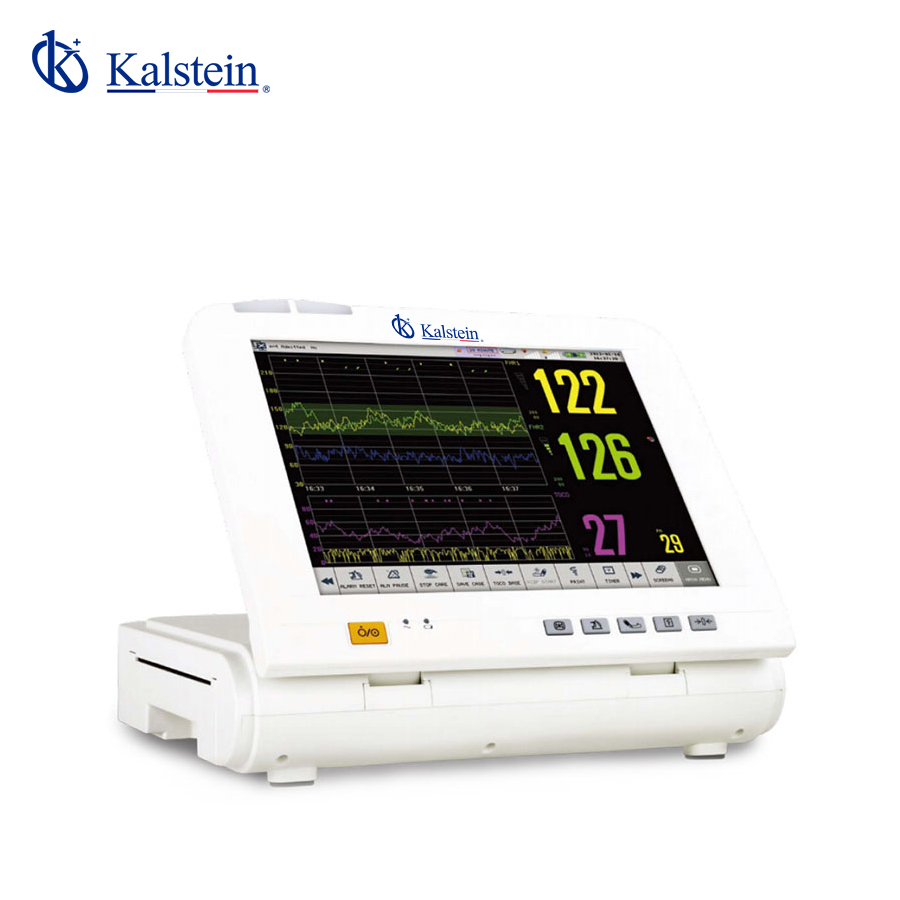
When considering top-tier fetal monitors, the Fetal Monitor YR02190C by Kalstein and the FC 1400 Fetal Monitor by Bionet are key players that come to mind. Both devices are equipped with advanced technology to ensure precise monitoring of fetal well-being, making them indispensable in modern obstetrics. Despite their shared purpose, each offers unique features tailored to distinct clinical needs.
The Fetal Monitor YR02190C by Kalstein stands out with its multi-crystal, wide-beam pulse Doppler for accurate detection. Its ergonomic design not only elevates user comfort but also features intuitive controls that simplify operation. Equipped with advanced capabilities such as comprehensive data analysis and easy integration into existing clinical systems, the YR02190C provides robust solutions for both antepartum and intrapartum monitoring. It stands not just as a piece of equipment but as a dependable companion in the critical journey of childbirth.
The FC 1400 Fetal Monitor by Bionet, meanwhile, is designed for real-time monitoring. It boasts dual ultrasound features for simultaneous fetal monitoring, with built-in maternal and fetal alarm systems to prompt immediate action when necessary. Compact and user-friendly, the FC 1400 fits seamlessly into various clinical settings. Although well-equipped, it brings competition in a market where technological precision is paramount.
| Features | Kalstein YR02190C | Bionet FC 1400 |
|---|---|---|
| Ultrasound Technology | Multi-crystal, wide-beam pulse Doppler | Dual ultrasound |
| Display | High-resolution screen | LCD screen |
| Data Analysis | Advanced analytical features | Basic analytical features |
| Alarm Systems | Advanced maternal and fetal alarms | Standard alarms |
| Integration | Seamless clinical integration | Limited integration capability |
How They Work
The Kalstein YR02190C uses a multi-crystal, wide-beam pulse Doppler technology that provides superior accuracy in detecting fetal heart rates and movements. This technology is crucial for early detection of any fetal distress, and its data analytics capabilities furnish clinicians with comprehensive insights into fetal health.
The Bionet FC 1400, with its dual ultrasound technology, is designed to simultaneously monitor twin pregnancies, a beneficial feature in complex obstetric cases. It also employs maternal and fetal alarm systems to alert practitioners to any urgent needs for intervention.
What They Are Used For
Both monitors are essential in the monitoring of fetal health during pregnancy and childbirth. They track fetal heart rate, movements, and contractions, providing invaluable information that healthcare providers rely on to ensure the well-being of both mother and baby.
Types
The YR02190C and FC 1400 exemplify modern, non-invasive fetal monitoring devices aimed at delivering comprehensive monitoring solutions. While both are used for similar applications, the YR02190C is more suited for high-precision requirements due to its superior technological features.
Market Price
Fetal monitors like the Kalstein YR02190C and Bionet FC 1400 are typically valued between $3,000 and $7,000, depending on the configuration and additional features. The YR02190C, given its superior capabilities, is positioned at the higher end of this spectrum, providing great value for its advancements.
Frequently Asked Questions
What makes the Kalstein YR02190C superior in clinical applications?
The YR02190C offers superior accuracy and comprehensive data integration, allowing for detailed insights into fetal well-being.
Is the FC 1400 suitable for monitoring twins?
Yes, the Bionet FC 1400’s dual ultrasound feature makes it ideal for twin surveillance.
Can these monitors integrate with existing hospital systems?
Kalstein’s YR02190C integrates seamlessly into various clinical systems, while Bionet’s FC 1400 has more limited capabilities.
Advantages and Disadvantages
Kalstein YR02190C Advantages: Offers top-tier accuracy with advanced technology, seamless integration, and user-friendly design.
Bionet FC 1400 Advantages: Efficient and cost-effective for basic monitoring, especially in twin pregnancies.
Kalstein YR02190C Disadvantages: Higher price point due to its extensive features, but provides outstanding value.
Bionet FC 1400 Disadvantages: Limited in data analysis and system integration capabilities compared to its competitors.
Product Usage in the Field
In practice, the Kalstein YR02190C has been celebrated for its ability to seamlessly adapt to high-stakes environments where precision is crucial. Its advanced analytical tools assist healthcare providers in making swift, informed decisions. Meanwhile, the Bionet FC 1400 is practical in settings where uncomplicated cases are prevalent.
Recommendations
For those requiring high accuracy and extensive data analysis, the Kalstein YR02190C emerges as a preferred choice. Regular calibration and adherence to the manufacturer’s guidelines will ensure optimal performance. Regardless of your choice, both devices require proper training for efficient operation and maintenance.
If you are seeking a fusion of innovation and quality, you’ve come to the right place. At Kalstein, we offer you the luxury of exploring our exclusive catalog of laboratory equipment. We manufacture each piece of equipment with a level of excellence. Our intuitive and agile online purchasing channels are designed for your convenience, ensuring the friendliest prices. Don’t hesitate any longer, we bring science to life and it’s time to be part of our community. https://kalstein.iq/product/fetal-monitor-yr02190c/