
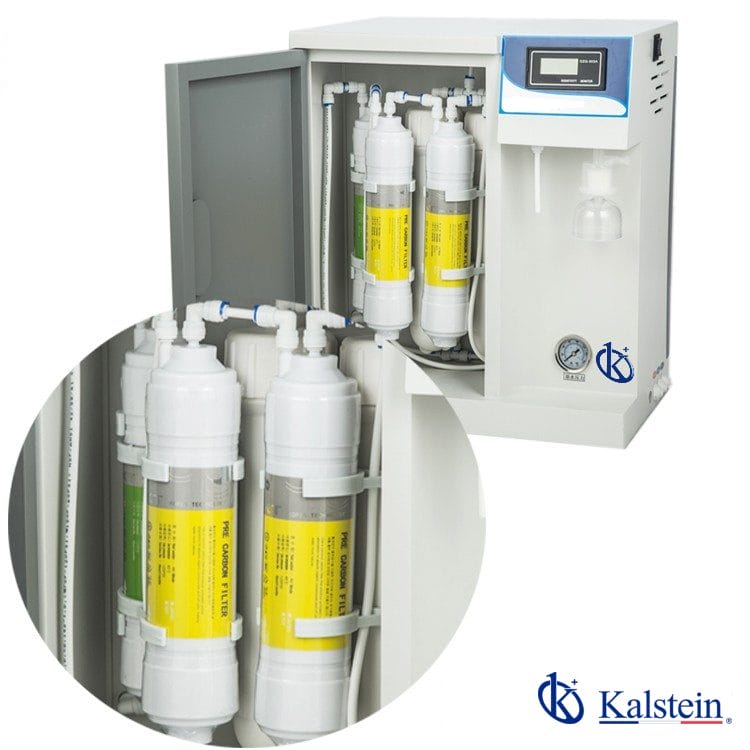
The realm of laboratory equipment is vast, and when it concerns water purification systems, precision and reliability are indispensable. The Deionized Water System YR57/YR57-2 by Kalstein and the Milli-Q IQ 7000 by MilliporeSigma stand out as top contenders in their class. Both systems are designed to deliver high-purity water essential for critical lab applications. However, subtle distinctions can make a considerable difference for your specific requirements.
Kalstein’s Deionized Water System YR57/YR57-2 is renowned for its advanced purification technology, providing consistency and durability. This system is engineered to produce water with the highest quality using an integrated UV lamp and reverse osmosis filters, ensuring the removal of chemical contaminants and microorganisms. Its ergonomic design and user-friendly interface make it especially suited for environments that demand uncompromised water quality. Conversely, the Milli-Q IQ 7000 by MilliporeSigma is a trusted name in lab water solutions, offering high-volume water purification while integrating modern technologies for enhanced water quality monitoring and management.
| Feature | Kalstein YR57/YR57-2 | MilliporeSigma Milli-Q IQ 7000 |
|---|---|---|
| Purification Technology | Reverse Osmosis, UV Lamp | Advanced Filtration and UV Technology |
| Capacity | Customizable Options | High-Volume Output |
| User Interface | User-friendly, Intuitive Controls | Smart Monitoring System |
| Price Range | Competitive Pricing | Premium Pricing |
How They Work
The Deionized Water System YR57/YR57-2 uses a combination of reverse osmosis and UV lamp treatment to purify water. The reverse osmosis filters out ionic and organic contaminants, while the UV lamp ensures sterilization by eliminating microorganisms. On the other hand, the Milli-Q IQ 7000 also uses a filtration process that removes a wide array of impurities, supplemented by a sophisticated UV purification method which targets microbial contaminants, guaranteeing water quality suitable for sensitive laboratory processes.
What They Are Used For
Both systems are integral to laboratory settings where deionized water is necessary for various scientific applications. This includes pharmaceuticals, chemical analysis, and lab experiments that require a stringent level of water purity to ensure valid and reliable results. The choice between the two often boils down to specific laboratory requirements and volume needs.
Types
The Deionized Water System YR57/YR57-2 is available in multiple configurations to cater to different laboratory requirements, with options for both basic and advanced setups depending on the volume and purity level needed. The Milli-Q IQ 7000 is typically offered as a high-capacity unit tailored for laboratories with significant daily water throughput.
Market Price
In terms of market pricing, the Deionized Water System YR57/YR57-2 from Kalstein is known for its affordability relative to the quality it provides, making it an attractive option for labs mindful of budget constraints. Conversely, the Milli-Q IQ 7000 is often priced at a premium, reflecting its extensive brand recognition and integrated technology features.
Frequently Asked Questions
What is the primary difference between deionized and distilled water?
Deionized water is water that has had all of its ions removed, while distilled water is water that has been boiled and condensed back into liquid. Both are purified, but by different methods, and are used in different laboratory contexts.
How often should I replace the filters?
Filter replacement frequency can vary based on usage and the system being used. It’s generally recommended to check filters every three to six months. Refer to the user manual for specific guidance.
Advantages and Disadvantages
Advantages of Kalstein YR57/YR57-2: Offers a flexible and cost-effective solution with high purification standards, intuitive interface, and customizable setup options. Ideal for labs looking for quality without high expenditure.
Disadvantages of Kalstein YR57/YR57-2: May require regular maintenance to ensure longevity, similar to other systems in its category.
Advantages of Milli-Q IQ 7000: Modern technology integration for seamless operations, high-capacity output, and comprehensive filtration process.
Disadvantages of Milli-Q IQ 7000: Higher initial investment and ongoing maintenance costs can be a concern for budget-conscious labs.
Product Use in the Field
In practical applications, the Kalstein Deionized Water System YR57/YR57-2 is widely used across various sectors, from research laboratories to industrial settings where water purity can’t be compromised. Its versatility and effectiveness make it a preferred choice for many institutions. The Milli-Q IQ 7000 similarly finds its niche in larger laboratories where high volumes of pure water are a daily requirement, ensuring consistency and reliability.
Recommendations
To ensure optimal performance of the Deionized Water System YR57/YR57-2, regular inspections and timely filter replacements are crucial. Training staff on proper operation techniques can also extend the lifespan of the unit. Additionally, monitoring water quality feedback will help in making necessary adjustments to maintain system efficiency.
If you’re seeking a blend of innovation and quality, you’ve come to the right place. At Kalstein we offer you the luxury of exploring our exclusive catalog of laboratory equipment. We manufacture each piece with a level of excellence. Our intuitive and agile online shopping channels are designed for your convenience, ensuring the most friendly prices. Don’t hesitate any longer, we bring science to life, it’s time to become part of our community. https://kalstein.iq/product/deionized-water-system-yr57-yr57-2/.