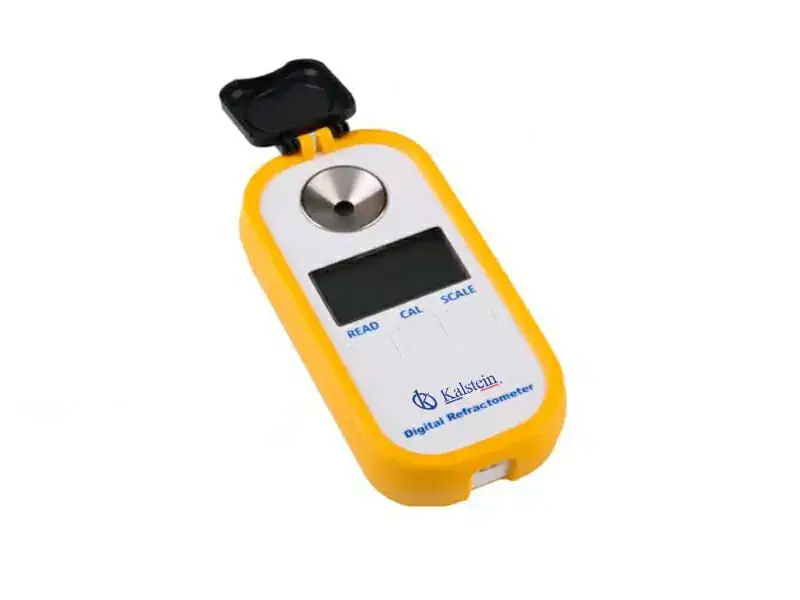
Digital BRIX+ Salinity Refractometer: Practical Usage Guide 2026
What is it used for in 2026
The Digital BRIX+ Salinity Refractometer is primarily used for measuring the concentration of soluble solids in various aqueous solutions. In 2026, its applications span across multiple industries including food and beverage, agriculture, and environmental monitoring. It accurately measures sugar concentrations in fruit juices and syrups, as well as salinity levels in seawater and other saline solutions. This versatility makes it an essential tool for laboratory professionals looking to conduct precise analysis.
History and evolution of the technology
The technology behind refractometers dates back to the 19th century, with early models being purely optical devices. Over the years, advancements in digital technology have transformed refractometers, enhancing their accuracy and ease of use. The introduction of automatic temperature compensation (ATC) allows measurements to be corrected without manual intervention, making modern digital BRIX+ Salinity Refractometers indispensable in laboratories today.
How to use it step by step
Using a Digital BRIX+ Salinity Refractometer can be broken down into the following steps:
- Preparation: Clean the prism surface with distilled water and a lint-free cloth to avoid contamination.
- Calibration: Calibrate the refractometer according to the manufacturer's instructions using distilled water.
- Sample Placement: Place a few drops of the sample solution onto the prism surface.
- Measurement: Close the cover plate and allow the sample to stabilize. Read the result from the digital display.
- Cleaning: Clean the prism after each use to ensure accurate future measurements.
Best techniques and protocols
To achieve optimal results with the Digital BRIX+ Salinity Refractometer, consider the following techniques:
- Ensure that the sample is at the calibrated temperature range of 0-40°C.
- Use consistent sample volumes to maintain measurement accuracy.
- Conduct multiple measurements for reliable averages, especially in critical analyses.
- Document all readings and calibrations for future reference.
- Perform routine maintenance checks to ensure operational efficiency.
Practical applications by laboratory type
The Digital BRIX+ Salinity Refractometer finds relevance across various laboratory settings:
- Food and Beverage Laboratories: Measuring sugar concentrations in juices and syrups for quality control.
- Agricultural Laboratories: Assessing soil salinity levels and plant hydration needs.
- Environmental Monitoring: Testing salinity in water bodies for ecological studies.
- Research Laboratories: Conducting experiments that require precise measurements of refractive indices.
Regulations, standards and certifications
Laboratories using Digital BRIX+ Salinity Refractometers must adhere to specific regulations and standards to ensure compliance and accuracy:
- ISO 17025 for laboratory testing and calibration.
- FDA guidelines for food safety regarding sugar content measurement.
- Environmental regulations concerning water quality analysis.
Comparison with alternative technologies
While there are different technologies available for measuring sugar and salinity, the Digital BRIX+ Salinity Refractometer offers unique advantages:
- Higher accuracy compared to traditional hydrometers.
- Faster results than titration methods.
- Portability and ease of use over complex laboratory setups.
Comparison of available models
| Model | Best for | Key specs | Recommended use case |
|---|---|---|---|
| YR05961 | Brix measurement | Range: 0-50%, Min. Div.: 0.1%, Accuracy: ±0.2% | Measuring sweetness in fruit juices |
| YR05962 | Salinity measurement | Range: 0-280‰, Min. Div.: 0.1%, Accuracy: ±0.2% | Testing salinity in brine solutions |
| YR05963 | Salinity measurement | Range: 0-280‰, Min. Div.: 1‰, Accuracy: ±2‰ | General salinity testing |
| YR05964 | Density measurement | Range: 1.000-1.217, Min. Div.: 0.001, Accuracy: ±0.002 | Measuring densities of sugars in solutions |
| YR05965 | Refractive index measurement | Range: 1.3330-1.4200nD, Min. Div.: 0.0001nD, Accuracy: ±0.0003nD | Analyzing optical properties of solutions |
Common mistakes and how to avoid them
Here are some common mistakes users make and how to ensure accuracy:
- Not calibrating the device before use — always calibrate using distilled water.
- Forgetting to clean the prism — regular cleaning is crucial for reliable measurements.
- Using samples at improper temperatures — ensure sample temperature is within the recommended range.
- Not documenting measurements — maintain a log for tracking and improvement.
Maintenance, calibration and good practices 2026
To prolong the lifespan and accuracy of the Digital BRIX+ Salinity Refractometer:
- Perform regular calibration checks with standard solutions.
- Store the device in a cool, dry place to prevent damage.
- Inspect for any physical damage before each use.
- Replace the batteries as needed to ensure consistent performance.
Cost-benefit analysis 2026
Investing in a Digital BRIX+ Salinity Refractometer offers numerous benefits in terms of efficiency and accuracy:
- Initial cost is often outweighed by the precision it brings in measurements.
- Time saved by eliminating manual methods increases laboratory throughput.
- Versatility across different applications allows for multi-use in various testing environments.
Frequently asked questions
What should I consider when choosing a Digital BRIX+ Salinity Refractometer?
Consider the measurement range, accuracy, and specific applications you require. Look for features like automatic temperature compensation and digital readouts for ease of use.
How often should I calibrate my refractometer?
It is recommended to calibrate your refractometer before each use to ensure accuracy, especially if you are measuring different types of samples.
Can I use the refractometer for both Brix and salinity measurements?
Yes, models like YR05961 and YR05962 allow you to measure both Brix and salinity, making them versatile for various applications.
What is the importance of automatic temperature compensation?
Automatic temperature compensation helps in providing accurate readings by adjusting the results based on temperature variations that could affect measurements.
Are there specific cleaning products I should use for my refractometer?
It’s best to use distilled water and a soft lint-free cloth. Avoid harsh chemicals that can damage the prism surface.
What are some best practices for taking measurements?
Ensure the prism is clean, use consistent sample sizes, and allow the sample to stabilize before reading the result for maximum accuracy.
How do I request a quote for a refractometer?
You can request a quote by contacting our customer service or visiting our online platform to get pricing details for your chosen model.
If you are looking for a fusion of innovation and quality, you have come to the right place. At Kalstein, we offer you the luxury of exploring our exclusive catalog of laboratory equipment. We manufacture every device to the highest standards of excellence. Our intuitive and seamless online purchasing channels are designed for your convenience, securing the most competitive prices. Hesitate no longer — we bring science to life, it is time to become part of our community.