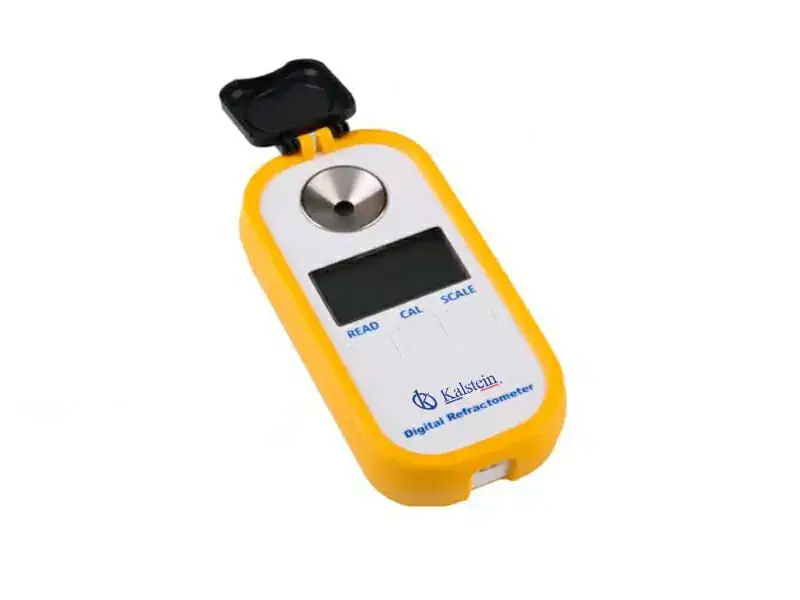
Digital Salinity Refractometers: Best Techniques and Protocols 2026
What is it used for in 2026
Digital Salinity Refractometers are essential tools in various laboratory settings, particularly for measuring the salinity of solutions such as sodium chloride or seawater. In 2026, these instruments have evolved to offer enhanced accuracy and user-friendliness, making them indispensable for laboratory professionals.
History and evolution of the technology
Refractometry has a rich history, beginning in the early 19th century. The evolution of Digital Salinity Refractometers has been marked by advancements in optical technology and digital displays, leading to units that provide immediate and precise readings. The introduction of Automatic Temperature Compensation (ATC) has further refined accuracy, which has become standard in 2026 models.
How to use it step by step
- Prepare your sample solution that needs salinity measurement.
- Place a single drop of the solution onto the prism of the refractometer.
- Close the cover to ensure no light interference.
- Press the read button to get an immediate digital reading.
- Record the measurement for your data collection.
Best techniques and protocols
Utilizing the right techniques ensures optimal performance from Digital Salinity Refractometers. Here are some best practices:
- Always calibrate your refractometer before use, preferably with a standard solution.
- Ensure the prism is clean to avoid contamination affecting the results.
- Use samples at room temperature for more accurate readings, as temperature fluctuations can impact results.
- Regularly maintain the device by checking and cleaning the optical components.
- Document all measurements systematically for reproducibility and traceability in your experiments.
Practical applications by laboratory type
Digital Salinity Refractometers find applications across various types of laboratories:
- Environmental laboratories: Measuring salinity in water samples from rivers, lakes, and oceans to monitor ecological health.
- Food and beverage laboratories: Determining salt concentration in food products is essential for quality control.
- Chemistry and chemical engineering labs: Analyzing chemical solutions where salinity impacts reactions.
- Aquaculture: Monitoring salinity levels in fish farming to optimize conditions for aquatic species.
Regulations, standards and certifications
In 2026, Digital Salinity Refractometers comply with various international standards such as ISO and ASTM for accuracy and reliability. Laboratories must ensure that their devices meet these regulations to maintain quality assurance in testing environments.
Comparison with alternative technologies
While Digital Salinity Refractometers are popular, alternatives such as conductivity meters and hydrometers may also be used for measuring salinity. However, refractometers offer faster readings, require smaller sample sizes, and provide higher accuracy, making them the preferred choice in many settings.
Comparison of available models
| Model | Best for | Key specs | Recommended use case |
|---|---|---|---|
| YR05953 | Salinity up to 28% | Measurement Range: 0.0 - 28.0%, Min. Division: 0.10%, Accuracy: ±0.1% | Ideal for water quality analysis in environmental labs. |
| YR05954 | High salinity solutions | Measurement Range: 0 - 280‰, Min. Division: 1‰, Accuracy: ±1‰ | Recommended for seawater salinity testing. |
| YR05955 | Density measurement | Measurement Range: 1.000 - 1.217, Min. Division: 0.001, Accuracy: ±0.002 | Useful in chemical engineering labs for density analysis. |
| YR05956 | Refractive index measurement | Measurement Range: 1.3330 - 1.3900nD, Min. Division: 0.0001nD, Accuracy: ±0.0003nD | Applicable in research requiring precise optical measurements. |
| YR05957 | Salinity up to 100‰ | Measurement Range: 0 - 100‰, Min. Division: 1‰, Accuracy: ±2‰ | Ideal for brine solution assessments in aquaculture. |
| YR05958 | Clinidity measurement | Measurement Range: 0 - 57‰, Min. Division: 1‰, Accuracy: ±2‰ | Useful in industries requiring precise clinidity assessments. |
| YR05959 | Density measurement | Measurement Range: 1.000 - 1.070, Min. Division: 0.001, Accuracy: ±0.002 | Recommended for viscosity and density assessments in labs. |
| YR05960 | Refractive index measurement | Measurement Range: 1.3330 - 1.3530nD, Min. Division: 0.0001nD, Accuracy: ±0.0003nD | Applicable in optical laboratories requiring high precision. |
Common mistakes and how to avoid them
Using Digital Salinity Refractometers effectively requires awareness of common mistakes:
- Not calibrating the device regularly which can lead to inaccurate readings.
- Neglecting to clean the prism can result in contamination and skewed results.
- Using samples at extreme temperatures may produce unreliable measurements; always aim for room temperature.
- Failing to document results systematically can hinder data integrity.
Maintenance, calibration and good practices 2026
Maintaining your Digital Salinity Refractometer is crucial:
- Perform periodic calibrations with standard solutions to ensure accuracy.
- Clean the optical components regularly with a soft cloth to prevent residue buildup.
- Store the device in a protective case to avoid physical damage.
- Follow the manufacturer’s guidelines for maintenance to prolong the lifespan of the equipment.
Cost-benefit analysis 2026
Investing in Digital Salinity Refractometers presents a cost-effective solution for laboratories. These devices save time due to immediate readings and reduce material waste as they require only a small sample size. Given their accuracy, the potential for improved data quality can outweigh initial purchase costs, especially in research-oriented environments.
Frequently asked questions
How often should I calibrate my salinity refractometer?
Calibration should be performed before each use or at least once daily, especially if the device is used frequently. Regular checks ensure accuracy and reliability in measurements.
Can I use any solution for calibration?
No, it is recommended to use a standard calibration solution with known salinity values to ensure the refractometer gives accurate readings.
What temperature should my samples be for accurate readings?
Samples should ideally be at room temperature, as extreme temperatures can affect the refractive index and lead to inaccurate results.
Is it necessary to clean the prism after each use?
Yes, cleaning the prism after each use helps maintain accuracy by preventing contamination from previous samples.
What are the advantages of using a digital refractometer over a manual one?
Digital refractometers provide immediate readings, higher accuracy, and easier data management compared to manual models, making them more user-friendly and effective in laboratory settings.
How can I ensure durability for my refractometer?
To ensure durability, store it in a protective case, avoid exposure to extreme temperatures, and follow the manufacturer’s maintenance guidelines.
What should I do if my readings seem inconsistent?
Check if the device is calibrated properly, clean the prism, and ensure you are using samples at the right temperature. If issues persist, consult the manufacturer’s support.
If you are looking for a fusion of innovation and quality, you have come to the right place. At Kalstein, we offer you the luxury of exploring our exclusive catalog of laboratory equipment. We manufacture every device to the highest standards of excellence. Our intuitive and seamless online purchasing channels are designed for your convenience, securing the most competitive prices. Hesitate no longer — we bring science to life, it is time to become part of our community.