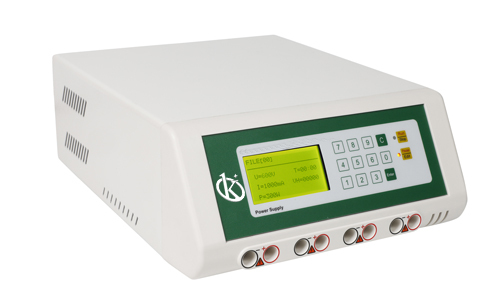
High Voltage Power Supply: Practical Techniques and Protocols 2026
What is it used for in 2026
High voltage power supplies are essential tools in various laboratory applications in 2026. They are primarily used for electrophoresis, powering particle accelerators, testing insulation, and providing voltage for a wide range of scientific experiments. The precision and functionality of these devices allow researchers to conduct experiments requiring stable and adjustable voltage levels, crucial for achieving accurate results.
History and evolution of the technology
The development of high voltage power supplies has evolved significantly since their inception. Early models were rudimentary, often lacking precise control and safety features. Over the years, advancements in microprocessor technology have transformed these devices, enabling features such as programmable settings, touch controls, and enhanced safety protocols. By 2026, high voltage power supplies integrate advanced technologies that allow for real-time monitoring and control, making them indispensable in modern laboratories.
How to use it step by step
Using a high voltage power supply involves several essential steps:
- Preparation: Gather all necessary equipment, including the high voltage power supply and the device you wish to power or test.
- Connection: Ensure all connections are secure. Use appropriate cables and connectors to avoid short circuits.
- Configuration: Set the desired voltage, current, and output parameters on the power supply. Use the touch controls to input values accurately.
- Testing: Gradually increase the voltage while monitoring the output. Ensure the device responds correctly to changes in voltage.
- Monitoring: Continuously monitor the output values displayed on the LCD screen to maintain desired parameters.
- Shutdown: Once the experiment or test is complete, safely disconnect the device and turn off the power supply.
Best techniques and protocols
In 2026, best practices for using high voltage power supplies include:
- Using a controlled environment to minimize external interference.
- Implementing safety protocols, including wearing protective gear and using circuit breakers.
- Regularly calibrating the equipment to ensure accuracy.
- Documenting all settings and outputs for reproducibility.
Practical applications by laboratory type
High voltage power supplies find applications across different laboratory types:
- Research Laboratories: Used in experiments requiring controlled voltage for particle physics and materials testing.
- Clinical Laboratories: Essential for electrophoresis in medical diagnostics.
- Industrial Laboratories: Applied in the testing of electrical components and insulation materials.
Regulations, standards and certifications
High voltage power supplies must comply with several international standards and regulations, including:
- IEC (International Electrotechnical Commission) standards for safety and performance.
- ISO (International Organization for Standardization) certifications ensuring quality management systems.
- Local electrical safety regulations that govern the use of electrical equipment in laboratories.
Comparison with alternative technologies
High voltage power supplies are often compared with other voltage sources such as transformers and DC-DC converters. While transformers are excellent for stepping voltage up or down with high efficiency, high voltage power supplies offer more flexibility and precision for laboratory applications. DC-DC converters are utilized for specific low-power applications but fall short in providing the necessary voltage levels required in high voltage applications.
Comparison of available models
| Model | Best for | Key specs | Recommended use case |
|---|---|---|---|
| YR03409 | Stable voltage applications | 20–3000 V, 1–200 mA, 1–200 W | General electrophoresis and experiments requiring consistent voltage. |
| YR03408 | High voltage testing | 20–5000 V, 1–200 mA, 1–100 W | Ideal for insulation resistance testing and high voltage experiments. |
| YR03405 | Low voltage applications | 10–600 V, 1–500 mA, 1–300 W | Useful for testing smaller electronic components and devices. |
| YR03406 | Medium voltage applications | 20–1600 V, 1–100 mA, 1–160 W | Applicable in a variety of laboratory settings for moderate voltage requirements. |
| YR03407 | Versatile laboratory use | 20–3000 V, 1–400 mA, 1–400 W | Best for versatile laboratory testing and electrophoresis. |
Common mistakes and how to avoid them
Common mistakes when using high voltage power supplies include:
- Failing to verify connections can lead to equipment damage. Always double-check before powering on.
- Ignoring safety protocols can result in accidents. Always wear appropriate protective gear.
- Not documenting settings can lead to inconsistencies. Keep a log of all configurations used during experiments.
Maintenance, calibration and good practices 2026
For optimal performance, regular maintenance of high voltage power supplies is crucial. This includes:
- Calibrating the device regularly, at least once a year, to ensure accuracy.
- Inspecting cables and connectors for wear and tear.
- Keeping the equipment clean and free from dust to avoid overheating.
Cost-benefit analysis 2026
Investing in a high voltage power supply can be costly; however, the benefits often outweigh the initial expenses. The precision and reliability of these devices contribute to more accurate research outcomes, potentially saving time and resources in the long run. In 2026, the trend towards automation and enhanced features in high voltage power supplies is expected to offer greater efficiency, making them a valuable asset in any laboratory.
Frequently asked questions
What are the safety precautions when using high voltage power supplies?
Always wear protective equipment, ensure proper grounding, and follow standard operating procedures to handle high voltage equipment safely.
How do I choose the right high voltage power supply for my experiments?
Consider the voltage and current requirements of your applications, as well as the specific functionalities you need, such as programmability and control features.
Can high voltage power supplies be used in clinical laboratories?
Yes, they are commonly used in clinical laboratories for applications like electrophoresis in diagnostics and research.
What is the typical lifespan of a high voltage power supply?
With proper maintenance and calibration, a high voltage power supply can last many years, often exceeding a decade of reliable service.
How often should I calibrate my high voltage power supply?
Regular calibration is recommended at least once a year to ensure accuracy and reliability in measurements.
What common mistakes should I avoid when using these devices?
Common mistakes include improper connection, neglecting safety protocols, and failing to document experimental settings.
If you are looking for a fusion of innovation and quality, you have come to the right place. At Kalstein, we offer you the luxury of exploring our exclusive catalog of laboratory equipment. We manufacture every device to the highest standards of excellence. Our intuitive and seamless online purchasing channels are designed for your convenience, securing the most competitive prices. Hesitate no longer — we bring science to life, it is time to become part of our community.