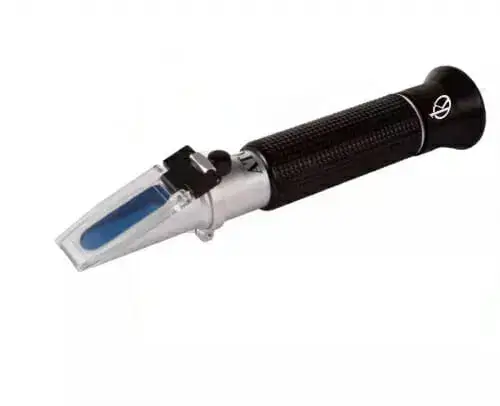
Honey Refractometers: Applications in Research, Biotechnology, and Academia 2026
What is it used for in 2026
In 2026, Honey Refractometers are essential tools in laboratories for measuring the sugar content in various substances. These devices are widely used in fields such as food quality control, agriculture, and research. They play a crucial role in determining the maturity of fruits, monitoring honey production, and ensuring the quality of sugar-related products. By providing accurate measurements of Brix levels, Honey Refractometers allow scientists and researchers to maintain quality standards and optimize production processes.
History and evolution of the technology
The technology behind Honey Refractometers has seen significant evolution since its inception. Originally developed in the late 19th century, the refractometer was used primarily in laboratories for basic sugar content analysis. With advancements in materials and technology, modern Honey Refractometers have become more precise and user-friendly, incorporating features like automatic temperature compensation (ATC) and improved optical systems. Today, these devices can provide real-time measurements, making them indispensable in both research and commercial settings.
How to use it step by step
Using a Honey Refractometer is straightforward. Here’s a step-by-step guide:
- Calibrate the device: Before taking readings, ensure that the refractometer is calibrated according to the manufacturer's instructions.
- Prepare the sample: Use a pipette to place a few drops of honey or the liquid to be measured on the refractometer’s prism.
- Close the cover: Gently close the cover to spread the sample evenly across the prism surface.
- Read the measurement: Look through the eyepiece to observe the boundary line between light and dark. This will indicate the Brix level.
- Record the results: Note the reading and repeat the process as necessary for accuracy.
Best techniques and protocols
To obtain accurate results, follow these best practices when using Honey Refractometers:
- Ensure the refractometer is clean and free of residues from previous samples.
- Always perform measurements at a consistent temperature to mitigate variations due to thermal effects.
- Use distilled water for calibration to ensure precision in readings.
- Take multiple measurements and average the results for enhanced reliability.
Practical applications by laboratory type
Honey Refractometers find practical applications across various laboratory settings:
- Food Quality Control: Monitor honey and sugar-based products for compliance with industry standards.
- Agricultural Research: Determine the sugar content of fruits to assess ripeness and quality during harvest.
- Biotechnology: Analyze fermentation processes to optimize sugar conversion rates in biofuel production.
- Academic Research: Conduct experiments involving sugar solutions in chemistry and biology classes.
Regulations, standards and certifications
Honey Refractometers must comply with various industry regulations and standards to ensure accuracy and reliability. Key certifications to look for include ISO 9001 for quality management and ISO 17025 for laboratory testing and calibration. It's important for laboratories to ensure that their equipment meets these standards to maintain credibility and trust in their results.
Comparison with alternative technologies
While Honey Refractometers are popular for measuring sugar content, alternative technologies exist:
- Hydrometers: Used for measuring density but less precise for specific sugar content.
- Digital Refractometers: Offer enhanced precision and ease of use compared to traditional models.
- Sugar Test Strips: Provide a quick and easy method, but lack the accuracy of a refractometer.
Comparison of available models
| Model | Best for | Key specs | Recommended use case |
|---|---|---|---|
| YR05885 | High sugar content liquids | 58-92% Brix, ±0.5% Brix accuracy | Honey inspection for quality control |
| YR05885-1 | General sugar solutions | 58-92% Brix, ±0.5% Brix accuracy | Monitoring fruit maturity in agriculture |
| YR05885-2 | High viscosity liquids | 58-92% Brix, ±0.5% Brix accuracy | Quality assessment post-harvest |
| YR05886 | Lower sugar content liquids | 10-30% water, ±0.10% water accuracy | Refinement in packaging processes |
Common mistakes and how to avoid them
To ensure accurate readings with Honey Refractometers, avoid the following common mistakes:
- Not calibrating the device before use; always calibrate with distilled water.
- Ignoring temperature fluctuations; measurements should be taken at consistent temperatures.
- Using contaminated samples; ensure cleanliness to avoid cross-contamination.
Maintenance, calibration and good practices 2026
Regular maintenance is vital for the longevity of Honey Refractometers:
- Clean the prism after every use with a soft cloth.
- Store the device in a protective case to prevent damage.
- Calibrate monthly or before critical uses to ensure accuracy.
Cost-benefit analysis 2026
When considering the purchase of a Honey Refractometer, evaluate the cost versus the benefits:
- The initial investment is typically low compared to potential savings in quality control costs.
- Increased accuracy leads to improved product quality, enhancing marketability.
- Regular use can speed up processes, resulting in higher productivity and efficiency.
Frequently asked questions
How do I choose the right Honey Refractometer for my lab?
Consider the specific measurements you need, such as the sugar content range and the types of liquids you will be testing. Evaluate the accuracy required and whether features like automatic temperature compensation are necessary for your applications.
What sample volume is required for effective measurement?
A few drops (approximately 2-3 drops) of the sample are typically sufficient to obtain an accurate reading on most Honey Refractometers.
Can I use my Honey Refractometer for other liquids?
Yes, while Honey Refractometers are designed for sugar solutions, they can measure other high-sugar liquids. However, always ensure that the refractometer is calibrated correctly for the specific liquid being tested.
How often should I calibrate my Honey Refractometer?
Calibration should be performed before each use or at least once a month, especially if used frequently, to ensure accurate measurements.
What maintenance is required for my Honey Refractometer?
Regular cleaning of the prism and body, proper storage, and periodic calibration are essential for maintaining the device's accuracy and extending its lifespan.
Are digital refractometers better than traditional ones?
Digital refractometers often provide enhanced accuracy, ease of use, and faster readings compared to traditional models, making them a preferred choice for many laboratories.
Where can I request a quote for a Honey Refractometer?
You can request a quote through our online platform, where we offer competitive pricing on a range of Honey Refractometers suited to your laboratory needs.
If you are looking for a fusion of innovation and quality, you have come to the right place. At Kalstein, we offer you the luxury of exploring our exclusive catalog of laboratory equipment. We manufacture every device to the highest standards of excellence. Our intuitive and seamless online purchasing channels are designed for your convenience, securing the most competitive prices. Hesitate no longer — we bring science to life, it is time to become part of our community.