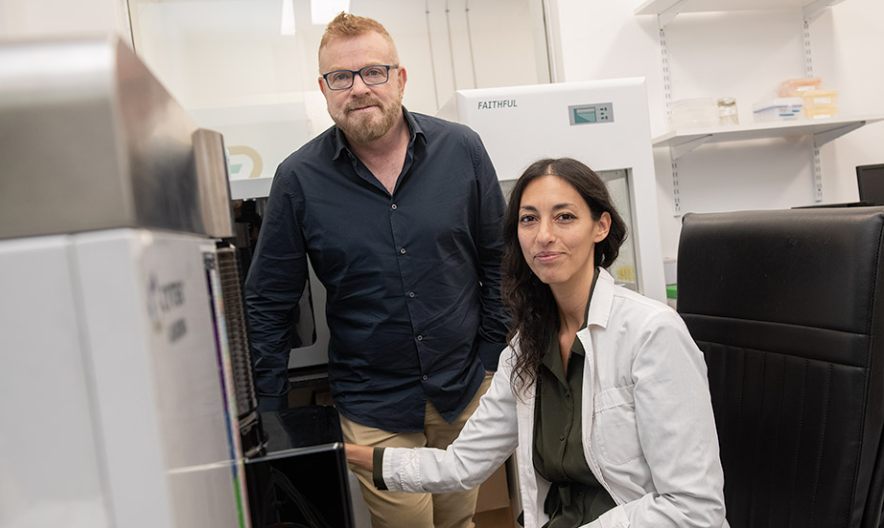
A team from Buenos Aires has discovered how galectin-1 helps tumors deceive the immune system. Their monoclonal antibody, already in the preclinical phase, could open a new path in the fight against colorectal cancer and melanoma.
The immune system is naturally capable of detecting and eliminating abnormal cells before they form a tumor. However, some cancers learn how to evade this defense mechanism by secreting substances that neutralize immune responses or even turn them in favor of the tumor. This process is known as immune evasion.
Immunotherapy aims precisely to block this deception so that the immune system can recover its ability to attack tumors. It is within this context that Dr. Rabinovich’s team made a key discovery.
Galectin-1: The Protein That Helps Tumors Survive
Galectin-1 is a protein capable of binding to sugars found on the surface of cells. Research conducted by Priscila Pañotta and Dr. Ada Blidner demonstrated that it plays a central role in the manipulation of myeloid cells — frontline immune cells — by tumors.
As a result, once altered by galectin-1, these cells stop fighting cancer and begin helping it instead. They suppress the T lymphocytes responsible for attacking tumors and stimulate the formation of new blood vessels that feed cancer cells with nutrients, a process known as angiogenesis.
“When we blocked this interaction, the opposite effect occurred: the immune system detected and eliminated tumor cells more effectively, and blood vessel formation decreased.”
A Monoclonal Antibody Moving Toward Clinical Trials
Based on this discovery, the biotechnology company Galtec — created directly from the laboratory’s research — developed a monoclonal antibody capable of blocking galectin-1 and breaking this cycle of tumor support.
Safety and efficacy studies conducted on animal models and patient-derived organoids have already been validated.
The team is currently working on the Good Manufacturing Practices (GMP) stage before entering Phase 1 clinical trials — the first tests involving human patients.
The primary cancers targeted are colorectal cancer and melanoma, although other cancer types could also benefit depending on their levels of galectin-1 expression.
“For certain cancers, the higher the level of galectin-1, the greater the presence of suppressive cells — and the worse the prognosis.”
Thirty Years of 100% Argentine Research
This breakthrough is the result of nearly 30 years of research led by Dr. Gabriel Rabinovich, who believed in the importance of galectin-1 long before its role became widely recognized.
The entire study was conducted in Argentina, in collaboration with researchers from La Plata and other national institutions, with support from private foundations including Fundación Sales, Fundación Barón, Bunge Born, Williams Foundation, as well as families of cancer patients.