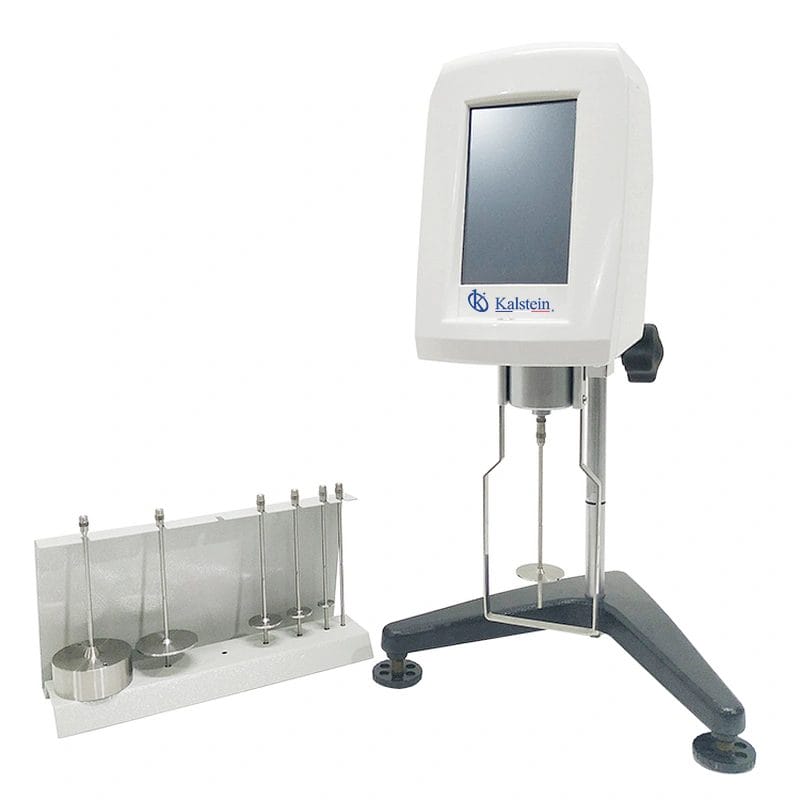
Interpreting Results and Reading Measurements with the YR05860 Viscometer
The Brookfield Viscometer YR05860 is a robust tool for measuring viscosity in various fluids. Understanding how to interpret the results and read measurements accurately is crucial for ensuring reliable data in laboratory settings. This guide delves into the operational specifics of the YR05860, highlighting key aspects of result interpretation and measurement reading.
Understanding Viscosity and Its Measurement
Viscosity is a measure of a fluid's resistance to flow. It reflects how easily a liquid flows under applied force. The YR05860 can measure viscosity in various units, primarily centipoises (cp) or millipascal-seconds (mPa·s). These values are essential in industries such as food, pharmaceuticals, and materials testing.
The YR05860 offers a measurement range from 10 to 13,000,000 mPa·s, allowing it to analyze both low and high viscosity samples. The choice of spindle and speed is crucial in obtaining accurate results, as different fluids respond differently under varying conditions.
Technical Data of the YR05860
| Model | Range of Measurement | Display | Spindle Specifications | Measurement Tolerance |
|---|---|---|---|---|
| YR05860 | 10-13,000,000 mPa·s (cp) | LCD | No. 0, 1, 2, 3, 4, 5, 6, 7 | ± 1% |
Interpreting the Display Readings
The YR05860 features an LCD display that provides real-time viscosity readings. Understanding how to interpret these readings is fundamental. The display shows both the viscosity value and the spindle used, which helps in confirming that the right parameters are being applied for the measurement.
Common error messages may arise if the viscosity exceeds the measurable limits or if the spindle is not rotating properly. A clear understanding of these readings enables swift troubleshooting and ensures reliable data collection.
Common Misinterpretations and How to Avoid Them
Misinterpretations can lead to significant errors in data analysis. One common mistake is assuming that a single viscosity value represents the entire fluid's behavior. In reality, viscosity can change with temperature, shear rate, and even over time due to shear thinning or thickening effects.
Another mistake is neglecting to consider the spindle speed used during measurement. Different speeds can yield different viscosity values, especially for non-Newtonian fluids. Users should always record both the viscosity reading and the spindle speed to ensure accurate interpretations.
Practical Examples of Reading Measurements
Let’s consider a practical example: measuring a food product, such as honey. When using the YR05860, you would select a suitable spindle (for example, spindle 3) and a speed of 60 rpm. After noting the viscosity reading on the LCD, one must also consider the temperature at which the measurement was taken since viscosity changes with temperature.
For honey, a viscosity of around 2,000 to 15,000 mPa·s is typical. If the reading shows outside this range, it could indicate either incorrect spindle choice, temperature effects, or even the sample being improperly prepared.
Factors Influencing Measurement Accuracy
Several factors can influence the accuracy of viscosity measurements with the YR05860. These include:
- Temperature: Ensure the sample is at a stable temperature, as viscosity varies significantly with temperature changes.
- Sample Preparation: The fluid should be homogeneous and free from air bubbles to ensure accurate readings.
- Spindle Selection: Different spindles are designed for different viscosity ranges, so selecting the appropriate spindle is critical.
Frequently Asked Questions
What types of fluids can I measure with the YR05860?
The YR05860 is capable of measuring a wide variety of fluids, including low-viscosity liquids like water and high-viscosity substances like gels and pastes.
How do I know which spindle to use for my sample?
Selecting the appropriate spindle depends on the viscosity range of your sample. Consult the user manual for guidelines on spindle selection based on viscosity.
How often should I calibrate the YR05860 viscometer?
Calibration should be performed regularly, typically once a month, or whenever the unit is moved or after significant use to ensure accuracy.
What should I do if I encounter an error code on the YR05860?
Consult the troubleshooting section of the user manual corresponding to the error code displayed. This will provide specific steps to rectify the issue.
Why is it important to record spindle speed along with viscosity readings?
Spindle speed can affect the viscosity readings, especially with non-Newtonian fluids. Recording it helps in accurately interpreting results and replicating the measurements later.
Can the YR05860 be used in field conditions?
While the YR05860 is designed for laboratory use, it can be utilized in field conditions provided that environmental factors like temperature and humidity are controlled.
How can I request a quote for the YR05860?
You can request a quote by contacting our sales department directly or visiting our online catalog for more information.
If you are looking for a fusion of innovation and quality, you have come to the right place. At Kalstein, we offer you the luxury of exploring our exclusive catalog of laboratory equipment. We manufacture every device to the highest standards of excellence. Our intuitive and seamless online purchasing channels are designed for your convenience, securing the most competitive prices. Hesitate no longer — we bring science to life, it is time to become part of our community.