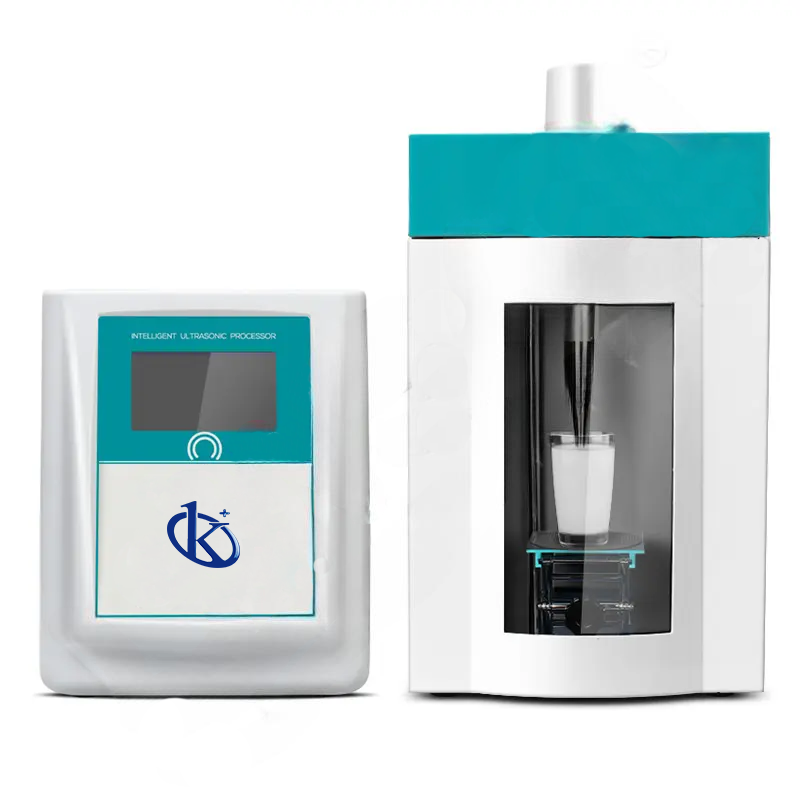
LIMS Integration and Data Flow Digitalization in Ultrasonic Homogenizers
In modern laboratories, the integration of LIMS (Laboratory Information Management Systems) with ultrasonic homogenizers represents a significant leap towards optimizing workflows and enhancing data management. This article delves into how various models of ultrasonic homogenizers can be integrated into laboratory data systems, ensuring seamless digital flow, compliance with standards, and improved efficiency.
Understanding Ultrasonic Homogenizers and Their Role in LIMS
Ultrasonic homogenizers are laboratory devices designed to emulsify, disperse, and homogenize samples using ultrasonic waves. They are crucial in various fields, including pharmaceuticals, food processing, and materials science. Integrating these homogenizers with LIMS allows for better tracking of sample processing, automated data acquisition, and compliance with laboratory standards.
Benefits of LIMS Integration with Ultrasonic Homogenizers
The integration of ultrasonic homogenizers with LIMS provides several advantages:
- Improved Data Management: Digital data management allows for real-time monitoring and analysis of homogenization processes.
- Enhanced Compliance: Ensures adherence to quality management standards like ISO 17025.
- Increased Efficiency: Streamlines workflows by reducing manual data entry and potential errors.
Key Features of Ultrasonic Homogenizers for LIMS Integration
Different models of ultrasonic homogenizers offer unique features that facilitate their integration with LIMS. Let’s explore some of these features:
Model Overview
| Model Code | Power (W) | Mixing Capacity (ml) | Control Features | Best For |
|---|---|---|---|---|
| YR05015 | 1.5 – 150 | 0.1 – 150 | PID control, touch screen | Small volume applications |
| YR05016 | 2-5 – 250 | 0.1 – 300 | PID control, data logging | Medium volume applications |
| YR05017 | 10 – 650 | 0.1 – 500 | Real-time monitoring | Research labs |
| YR05018 | 10 – 900 | 0.1 – 600 | Alarms and safety features | High-throughput labs |
| YR05019 | 20 – 1,200 | 1 – 1,000 | Temperature control | Pharmaceutical applications |
| YR05020 | 50 – 1,800 | 1 – 1,200 | Automatic overload protection | Industrial applications |
Connecting Ultrasonic Homogenizers to LIMS: Protocols and Interfaces
To successfully integrate ultrasonic homogenizers with LIMS, laboratories must ensure compatibility in terms of connectivity protocols. Common interfaces include:
- HL7: Ensures seamless data exchange between devices and laboratory systems.
- REST APIs: Facilitates real-time data retrieval and submission.
- ASTM Standards: Provides a framework for data formats and interoperability.
Data Flow Digitalization: Steps for Implementation
Implementing digital data flow requires strategic planning. Here are the steps to ensure successful integration:
- Assess current laboratory workflows and identify bottlenecks.
- Choose ultrasonic homogenizer models with desired features and compatibility.
- Implement necessary software and protocols for integration with LIMS.
- Conduct training for laboratory personnel on new systems.
- Monitor and optimize the integrated workflow continuously.
Comparison of Available Models
| Model | Connectivity | Protocols Supported | Integration Effort | Best For |
|---|---|---|---|---|
| YR05015 | USB | HL7 | Low | Small labs |
| YR05016 | USB, Wi-Fi | REST, ASTM | Medium | Medium labs |
| YR05017 | Ethernet | HL7, REST | High | Research institutions |
| YR05018 | Wi-Fi | REST | Medium | High-throughput labs |
| YR05019 | Ethernet, USB | ASTM | High | Pharmaceutical development |
| YR05020 | USB, Ethernet | HL7 | Medium | Industrial applications |
Common Mistakes and How to Avoid Them
Laboratories often encounter pitfalls during the integration process. Here are common mistakes and solutions:
- Insufficient Training: Ensure all lab staff are trained on new systems to avoid operational errors.
- Overlooking Compatibility: Before purchase, confirm that homogenizers support necessary protocols to avoid integration issues.
- Ignoring Data Management Policies: Establish clear policies for data handling to ensure compliance with regulations.
Frequently Asked Questions
How can ultrasonic homogenizers improve data flow in laboratories?
Ultrasonic homogenizers, like the YR05020, enhance data flow by integrating with LIMS, allowing real-time monitoring and data acquisition, which streamlines processes and reduces errors.
What are the best ultrasonic homogenizers for LIMS integration in 2026?
Models such as YR05019 and YR05020 are ideal for LIMS integration due to their support for connectivity protocols like HL7 and ASTM, making them suitable for advanced laboratory environments.
Which ultrasonic homogenizer offers the highest power for data-driven applications?
The YR05020 model provides up to 1,800 watts of power, making it an excellent choice for data-driven applications requiring high performance and reliability in sample processing.
What connectivity options should I look for in an ultrasonic homogenizer?
Look for models like the YR05016 that offer multiple connectivity options such as USB and Wi-Fi, ensuring compatibility with various laboratory information systems.
How to ensure compliance when integrating ultrasonic homogenizers with LIMS?
To ensure compliance, select models like the YR05019, which adhere to standards such as ASTM, and establish clear data management protocols within your LIMS.
What training is required for laboratory staff using integrated ultrasonic homogenizers?
Staff should receive comprehensive training on both the operational features of the ultrasonic homogenizers and the functionalities of the LIMS to maximize efficiency and compliance.
If you are looking for a fusion of innovation and quality, you have come to the right place. At Kalstein, we offer you the luxury of exploring our exclusive catalog of laboratory equipment. We manufacture every device to the highest standards of excellence. Our intuitive and seamless online purchasing channels are designed for your convenience, securing the most competitive prices. Hesitate no longer — we bring science to life, it is time to become part of our community.