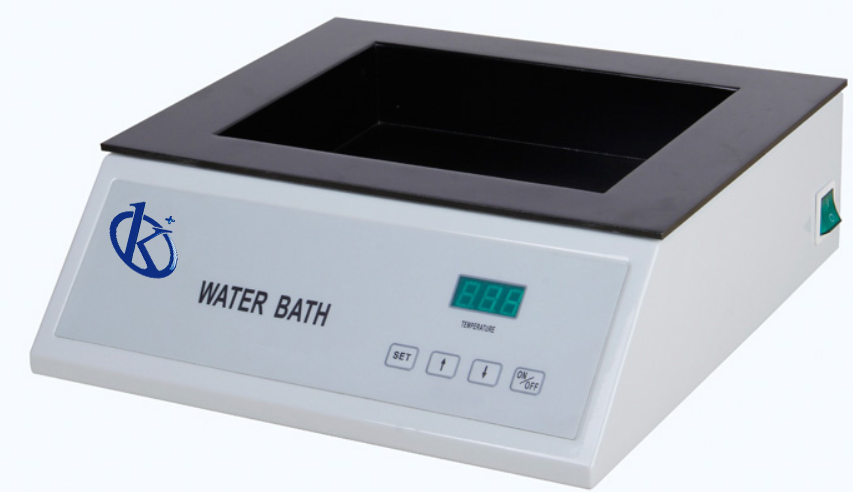
Maximizing ROI through Cost-Benefit Analysis of Tissue Water Baths
The effective management of laboratory resources is essential for ensuring profitability and productivity. Among various laboratory equipment, Tissue Water Baths play a crucial role in pathological anatomy by providing controlled heating for tissue samples. This article aims to explore how a comprehensive cost-benefit analysis can help laboratories maximize their return on investment (ROI) when selecting from different Tissue Water Baths.
Understanding the Importance of Cost-Benefit Analysis in Laboratories
Cost-benefit analysis is a systematic approach to evaluating the strengths and weaknesses of different alternatives—essential for making informed decisions in laboratory management. By assessing both the direct and indirect costs associated with laboratory equipment, professionals can effectively understand their investment's ROI. This analysis should include initial capital expenditure (CAPEX), ongoing operational expenses (OPEX), and the expected lifespan of the equipment.
Key Considerations for Tissue Water Baths
When selecting a Tissue Water Bath, several factors affect the overall cost-benefit equation:
- Temperature Range: The range of temperatures that a water bath can maintain influences its versatility in various applications.
- Energy Efficiency: Assessing energy consumption per operation contributes to ongoing costs and sustainability goals.
- Durability and Maintenance: The lifespan of the unit and any required maintenance or calibration can affect long-term costs.
Comparison of Available Models
| Model | CAPEX (USD) | Energy Consumption (W) | Temperature Range (°C) | Best for |
|---|---|---|---|---|
| YR449 | 400.00 | 200 | RT to 90 | High-quality heating for diverse tissue samples |
| YR451 | 800.00 | 400 | 0 to 85 | Real-time temperature monitoring for critical applications |
| YR452 | 950.00 | 500 | RT to 75 | Enhanced temperature control for delicate procedures |
Calculating ROI for Tissue Water Baths
To effectively calculate ROI, laboratories should consider various cost factors related to each model. For the YR449, the initial investment of $400 is relatively low compared to the potential savings in energy consumption and maintenance costs. The YR451, while pricier at $800, offers enhanced monitoring features that may justify the investment depending on lab requirements.
For comprehensive calculation, consider:
- Initial Costs: CAPEX of each model.
- Operational Costs: Monthly energy consumption multiplied by local utility rates.
- Payback Period: Time taken to recover the initial investment through efficiency gains.
Common Mistakes and How to Avoid Them
In the process of selecting a Tissue Water Bath, several missteps can lead to financial inefficiencies:
- Failing to conduct a thorough cost-benefit analysis.
- Overlooking energy consumption rates when evaluating models.
- Not considering specific laboratory applications when choosing the temperature range.
To mitigate these mistakes, laboratories should develop a checklist for evaluating models against specific operational needs and cost parameters.
Energy Efficiency and Sustainability
Energy consumption plays a critical role in both operational costs and environmental sustainability. The differences in energy usage among the models can significantly impact long-term costs. The following table breaks down the expected energy consumption:
| Model | Energy Consumption (W) | Annual Operating Cost (USD) |
|---|---|---|
| YR449 | 200 | 240 |
| YR451 | 400 | 480 |
| YR452 | 500 | 600 |
Key Advantages of Each Model
Each Tissue Water Bath model offers distinct advantages that can influence ROI:
YR449
This model is designed for high efficiency with rapid heating capabilities and long-lasting components, making it suitable for labs looking to minimize downtime.
YR451
The advanced digital display and real-time monitoring allow this model to excel in environments where precise temperature control is critical, justifying its higher cost.
YR452
With enhanced control features, this model is ideal for labs needing rigorous standards for temperature management, making it a worthwhile investment for advanced applications.
Frequently Asked Questions
How can I calculate ROI for a Tissue Water Bath in my laboratory?
To calculate ROI for a Tissue Water Bath, consider the total CAPEX, operational expenses for energy use, and the anticipated lifespan of the model. For instance, the YR449 costs $400 with lower energy consumption, making it a cost-effective choice.
What are the energy consumption rates for different Tissue Water Baths?
The energy consumption rates vary; for example, the YR449 consumes 200W, while the YR451 and YR452 use 400W and 500W, respectively. These rates affect the overall operational costs significantly.
Which model is best for ensuring compliance with laboratory standards?
The YR451 is equipped with advanced monitoring features that help ensure compliance with laboratory temperature standards, making it a great choice for labs requiring precise temperature control.
How does the temperature range affect the performance of Tissue Water Baths?
The temperature range influences the versatility of a water bath. The YR449 ranges from RT to 90°C, making it suitable for diverse applications, while the YR451 is limited to 0 to 85°C, focusing on specific needs.
What is the expected lifespan of Tissue Water Baths?
Tissue Water Baths typically have a lifespan of around 5 to 10 years depending on usage and maintenance. Choosing models with high durability, like the YR449, can extend this lifespan.
How can I optimize the cost of operations for Tissue Water Baths?
To optimize operational costs, choose models with lower energy consumption and consider their maintenance needs. The YR449 is known for energy savings and minimal maintenance requirements.
What key features should I look for in a Tissue Water Bath?
Look for features such as precise temperature control, energy efficiency, ease of operation, and durability. Models like the YR451 provide advanced monitoring that can enhance your laboratory’s efficiency.
How do maintenance needs vary among Tissue Water Baths?
Maintenance needs can vary based on model design and usage frequency. The YR449 requires less frequent calibration compared to others, making it a more convenient option for busy labs.
If you are looking for a fusion of innovation and quality, you have come to the right place. At Kalstein, we offer you the luxury of exploring our exclusive catalog of laboratory equipment. We manufacture every device to the highest standards of excellence. Our intuitive and seamless online purchasing channels are designed for your convenience, securing the most competitive prices. Hesitate no longer — we bring science to life, it is time to become part of our community.