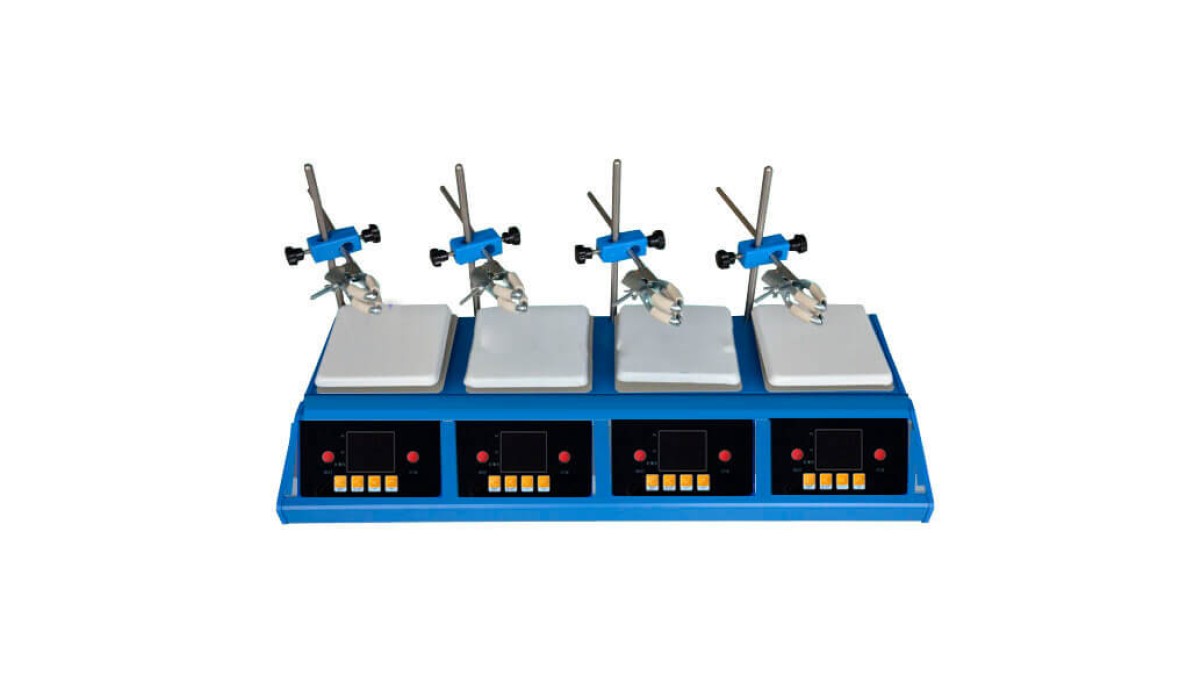
Multiposition Intelligent Digital Display Ceramic Hotplate Stirrer: Common Mistakes and How to Avoid Them in Daily Operation 2026
What is it used for in 2026
The Multiposition Intelligent Digital Display Ceramic Hotplate Stirrer is primarily used in laboratories for heating and stirring multiple samples simultaneously. This equipment is essential in chemistry and biology for reactions that require precise temperature control and uniform mixing. In 2026, its applications have expanded to include biopharmaceutical developments, quality control in manufacturing, and educational purposes in research institutions.
History and evolution of the technology
The evolution of hotplate stirrers began with simple mechanical stirrers. As technology advanced, the introduction of digital displays and PID temperature control improved accuracy and user experience. Initially, these devices were limited to single-position units, but innovations led to the development of multiposition systems that allow for simultaneous heating and stirring of various samples, significantly increasing lab efficiency.
How to use it step by step
To effectively use the Multiposition Intelligent Digital Display Ceramic Hotplate Stirrer, follow these steps:
- Setup: Place the device on a stable surface, ensuring adequate ventilation.
- Connect: Plug in the unit and switch it on.
- Adjust settings: Select the desired temperature and stirring speed using the digital display.
- Load samples: Carefully place your containers on the hotplate.
- Monitor: Use the digital display to monitor temperature and speed throughout the process.
- Completion: Once done, carefully remove samples and turn off the device.
Best techniques and protocols
Implement best practices such as calibrating the device regularly, choosing appropriate containers for heating, and avoiding overloading the hotplate to ensure efficient operation. It is advisable to use flat-bottomed glassware for better heat distribution and to avoid heating volatile substances without proper safety measures.
Practical applications by laboratory type
In research laboratories, these stirrers are used for compound synthesis, while in quality control labs, they facilitate material testing. Educational settings utilize them for demonstrations of chemical reactions, highlighting their versatility across different laboratory environments.
Regulations, standards and certifications
Laboratories utilizing Multiposition Intelligent Digital Display Ceramic Hotplate Stirrers must comply with safety regulations set by organizations such as OSHA and the FDA. Ensuring that the equipment meets industry standards such as ISO certifications is also essential for maintaining quality and safety in laboratory operations.
Comparison with alternative technologies
Compared to traditional mechanical stirrers, the multiposition hotplate stirrers offer enhanced control over temperature and stirring speed. Unlike magnetic stirrers, these units provide direct heating, resulting in faster heating times and greater precision in temperature management, making them a superior choice for many laboratory applications.
Comparison of available models
| Model | Best for | Key specs | Recommended use case |
|---|---|---|---|
| YR02953 | Basic multi-sample mixing | Temperature: Rt -380°C, Speed: 100-1800 RPM | Ideal for routine lab mixing tasks |
| YR02954 | Advanced mixing with enhanced features | Temperature: Rt -380°C, Speed: 100-1800 RPM | Suitable for applications requiring precise control |
| YR02955 | High-capacity mixing | Temperature: Rt -380°C, Speed: 100-1800 RPM | Perfect for large-scale experiments |
| YR02947 | Compact solutions for small labs | Speed: 0-2000 RPM | Useful for small-scale reactions and tests |
| YR02948 | Versatile applications | Speed: 0-2000 RPM | Adaptable for various laboratory settings |
| YR02949 | Cost-effective solution | Speed: Not specified | Great for labs on a budget |
Common mistakes and how to avoid them
Some common mistakes when operating these devices include:
- Overloading: Avoid placing too many samples on the hotplate.
- Incorrect temperature settings: Always calibrate the temperature before use.
- Neglecting maintenance: Schedule regular inspections and cleanings to ensure optimal performance.
- Using inappropriate containers: Select containers that are compatible with both the temperature and the stirring mechanism.
Maintenance, calibration and good practices 2026
Regular maintenance involves cleaning the surface after each use, checking for any wear on components, and ensuring that all controls are functioning correctly. Calibration should be performed before significant experiments to guarantee accurate readings, and it is good practice to document all maintenance activities for compliance purposes.
Cost-benefit analysis 2026
Investing in a Multiposition Intelligent Digital Display Ceramic Hotplate Stirrer can reduce operational costs by increasing throughput and decreasing the time required for experiments. The initial cost is offset by the enhanced efficiency and accuracy, making these units a valuable addition to any laboratory.
Frequently asked questions
What are the key features to look for in a hotplate stirrer?
When choosing a hotplate stirrer, consider features such as temperature range, stirring speed, digital display for precise adjustments, and the number of positions available for simultaneous mixing.
How do I determine which model is best for my laboratory needs?
Assess the scale of your experiments and the number of samples you typically handle. For larger batches, opt for models with more positions and higher capacities.
Can I use the hotplate stirrer for volatile substances?
Generally, it is advisable to avoid using hotplate stirrers for highly volatile substances unless appropriate safety measures are in place, such as fume hoods or containment vessels.
What types of containers can be used with these devices?
Use heat-resistant glassware or ceramics that can withstand high temperatures and ensure a flat bottom for even heating and stirring.
How often should I calibrate my hotplate stirrer?
Calibration should be performed before significant experiments and periodically based on usage frequency, ideally every few months.
What maintenance routines are essential for optimal operation?
Regular cleaning, checking electrical connections, and ensuring that the stirring mechanism is free from debris are crucial for maintaining performance.
Where can I request a quote for these devices?
If you are interested in acquiring a Multiposition Intelligent Digital Display Ceramic Hotplate Stirrer, you can easily request a quote through our online platforms.
If you are looking for a fusion of innovation and quality, you have come to the right place. At Kalstein, we offer you the luxury of exploring our exclusive catalog of laboratory equipment. We manufacture every device to the highest standards of excellence. Our intuitive and seamless online purchasing channels are designed for your convenience, securing the most competitive prices. Hesitate no longer — we bring science to life, it is time to become part of our community.