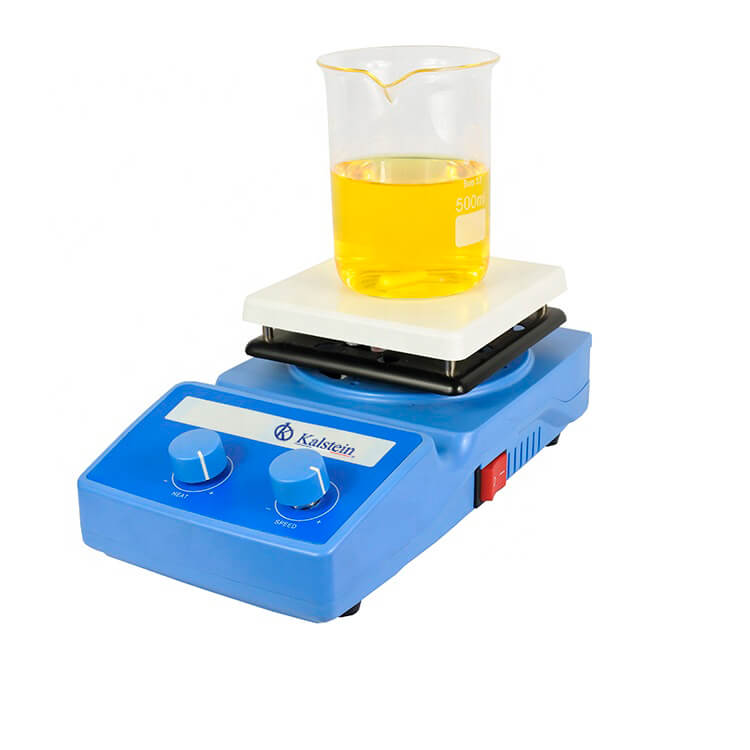
How to Optimize Laboratory Data Integration with Analog Ceramic Top Hotplate Stirrers?
In the rapidly evolving landscape of laboratory technology, the integration of data management systems has become essential. This is particularly true for equipment like Analog Ceramic Top Hotplate Stirrers. These devices not only facilitate physical experiments but also play a crucial role in the digitalization of laboratory data. This article explores various models, their compatibility with Laboratory Information Management Systems (LIMS), and how they can optimize laboratory workflows.
Understanding Analog Ceramic Top Hotplate Stirrers
Analog Ceramic Top Hotplate Stirrers are widely used in laboratories for their efficiency and reliability in heating and stirring solutions. Their role extends beyond mere functionality; they are integral to modern laboratory practices that require accurate data collection and management. The integration of these devices with LIMS helps in achieving better data traceability and enhanced experimental reproducibility.
Comparison of Available Models
| Model | Temperature Range (°C) | Features | Best for |
|---|---|---|---|
| YR02933 | Ambient to 325 | Compact design, user-friendly controls | Small-scale experiments |
| YR02934 | Ambient to 380 | PID control, digital display | Chemical and biological applications |
| YR02935 | Ambient to 380 | High heating power, robust construction | Laboratory settings requiring high throughput |
| YR02936 | Ambient to 400 | LED display, efficient thermal management | Advanced research environments |
Digitalization and LIMS Integration in Laboratories
The shift towards digital laboratories has necessitated the integration of various equipment with LIMS. Analog Ceramic Top Hotplate Stirrers provide vital data that can be seamlessly transferred to these systems. This integration supports better data management, ensuring that experiments are accurately documented. For instance, models like YR02934, equipped with digital displays and PID controls, can enhance the quality of data collected by providing precise temperature regulation.
Data Traceability and Compliance
Compliance with regulations such as ISO 17025 is crucial in laboratory settings. Integrating Analog Ceramic Top Hotplate Stirrers with LIMS allows for enhanced traceability of experimental data, which is vital for audits and quality assurance processes. Models such as YR02936, with features like LED displays and precise temperature controls, aid laboratories in meeting compliance standards by providing clear and accurate records of experimental conditions.
Energy Efficiency and Sustainability
As laboratories seek to reduce their environmental impact, energy-efficient equipment becomes essential. The Analog Ceramic Top Hotplate Stirrers, particularly the YR02935 model, are designed for high efficiency while maintaining performance. By optimizing energy consumption during experiments, laboratories can significantly reduce their carbon footprint, aligning with sustainability goals.
Common Mistakes and How to Avoid Them
One of the common mistakes laboratories make is underutilizing data integration capabilities. Often, equipment like Analog Ceramic Top Hotplate Stirrers are used without fully leveraging their digital features. For seamless integration with LIMS, it is crucial to ensure that the stirrers are properly calibrated and that data transfer protocols are established. Furthermore, laboratories should regularly update their data management practices to incorporate new advancements in technology.
Frequently Asked Questions
What are the key features to consider when selecting an Analog Ceramic Top Hotplate Stirrer for LIMS integration?
When selecting an Analog Ceramic Top Hotplate Stirrer, key features to consider include temperature control precision, data output options, and compatibility with existing software. Models like YR02934 offer PID control and digital display, making them suitable for LIMS integration.
How does the YR02936 model support data integration in laboratory workflows?
The YR02936 model supports data integration through its LED display and efficient thermal management, allowing for accurate data collection during experiments. This capability enhances data traceability when integrated with LIMS.
Which model is best for high-throughput laboratory settings requiring LIMS integration?
The YR02935 model is ideal for high-throughput laboratory settings due to its robust construction and high heating power. Its features facilitate efficient data collection, making it suitable for integration with LIMS.
What protocols are necessary for integrating Analog Ceramic Top Hotplate Stirrers with LIMS?
Necessary protocols for integrating Analog Ceramic Top Hotplate Stirrers with LIMS include establishing bidirectional communication, ensuring data security, and maintaining compliance with industry standards. This approach helps in achieving seamless data transfer.
How can Analog Ceramic Top Hotplate Stirrers enhance experimental reproducibility in laboratories?
Analog Ceramic Top Hotplate Stirrers enhance experimental reproducibility by providing precise temperature control and consistent stirring conditions. This promotes reliable results that can be easily recorded and analyzed within a LIMS framework.
What are the common pitfalls in the integration of laboratory equipment with LIMS?
Common pitfalls include inadequate training on software use, failure to regularly update protocols, and neglecting data security measures. Addressing these issues can improve the effectiveness of LIMS integration with Analog Ceramic Top Hotplate Stirrers.
Why is regular calibration important for hotplate stirrers in a digital laboratory?
Regular calibration ensures that hotplate stirrers, such as the YR02934, maintain accuracy in temperature settings, which is critical for data reliability in a digital laboratory environment. This is especially vital for compliance with standards like ISO 17025.
How does energy efficiency impact the operational costs of using hotplate stirrers in laboratories?
Energy efficiency directly impacts operational costs by reducing electricity consumption during experiments. Models like YR02935 are designed to optimize energy use, thus lowering overall laboratory expenses.
If you are looking for a fusion of innovation and quality, you have come to the right place. At Kalstein, we offer you the luxury of exploring our exclusive catalog of laboratory equipment. We manufacture every device to the highest standards of excellence. Our intuitive and seamless online purchasing channels are designed for your convenience, securing the most competitive prices. Hesitate no longer — we bring science to life, it is time to become part of our community.