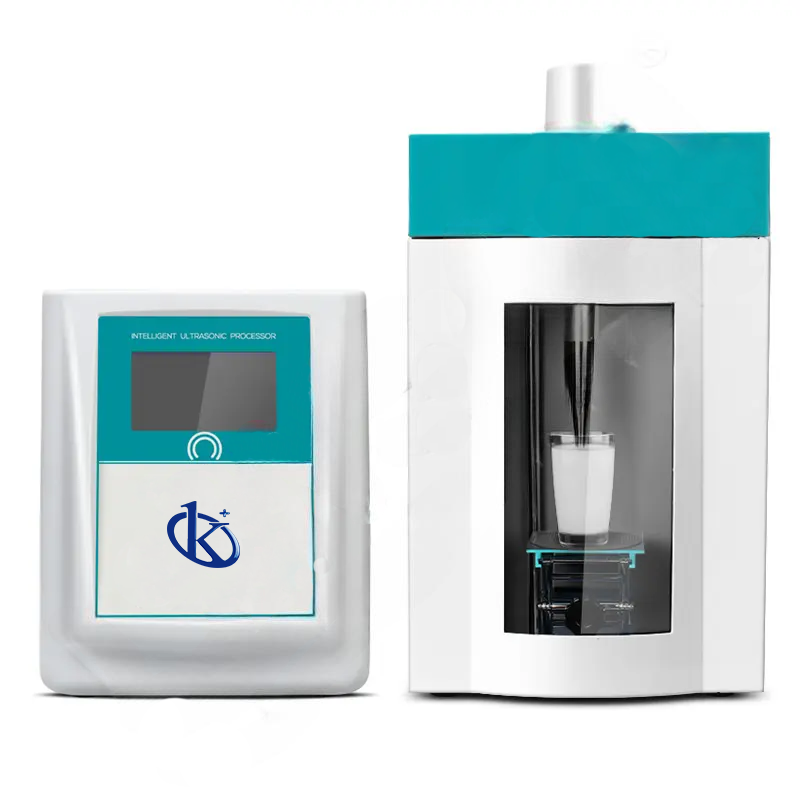
Ultrasonic Homogenizers: Applications in Research, Biotechnology, and Academia 2026
What is it used for in 2026
Ultrasonic homogenizers are versatile tools widely used in laboratory settings across various disciplines. In 2026, their applications span several fields including biotechnology, pharmaceuticals, food technology, and material science. These devices utilize high-frequency sound waves to disrupt and homogenize samples, making them essential for processes such as cell lysis, emulsification, dispersing solids in liquids, and the preparation of nanoparticles.
History and evolution of the technology
The history of ultrasonic homogenization dates back to the early 20th century when researchers discovered the effects of ultrasound on liquids. Initially, these technologies were used in cleaning and processing applications. Over the decades, advancements in ultrasonic technology led to the development of devices that could be used for homogenization in laboratories, evolving from basic equipment to sophisticated, user-friendly systems that allow precise control over various parameters. The integration of digital interfaces and improved power control mechanisms has made these devices essential in modern laboratories.
How to use it step by step
Using an ultrasonic homogenizer effectively involves several key steps:
- Preparation: Before beginning, ensure that you have all necessary materials, including the samples to be homogenized, appropriate ultrasonic probes, and any cleaning solutions for maintenance.
- Calibration: Calibrate the device according to the manufacturer's specifications to ensure accurate results.
- Sample Setup: Place the sample in a suitable container, ensuring that the container is compatible with ultrasonic processing.
- Probe Insertion: Insert the ultrasonic probe into the sample at the correct depth to optimize energy transfer.
- Settings Adjustment: Set the power level, frequency, and duration based on the specific requirements of your sample.
- Homogenization: Start the device and monitor the process. Observe for changes in the sample consistency.
- Post-Processing: Once homogenization is complete, carefully remove the probe, following safety protocols, and analyze the homogenized sample.
- Cleaning: Clean the probe and work area to prevent contamination for future experiments.
Best techniques and protocols
For optimal results when using ultrasonic homogenizers, consider the following techniques:
- Sequential Processing: For larger sample volumes, process in smaller batches to ensure uniformity.
- Temperature Control: Monitor the sample temperature, as ultrasonic homogenization can generate heat. Use cooling systems if necessary to prevent sample degradation.
- Optimization of Parameters: Experiment with different settings (power, duration, and frequency) to determine the optimal conditions for your specific sample type.
- Probe Selection: Choose the appropriate probe diameter and length for your sample volume to maximize efficiency.
Practical applications by laboratory type
Ultrasonic homogenizers serve various laboratory types effectively:
- Biotechnology Labs: Used for cell disruption, extraction of nucleic acids, and protein extraction.
- Pharmaceutical Labs: Essential for emulsifying drug formulations and preparing nanoparticle dispersions.
- Food Technology Labs: Employed in the preparation of beverages and food products through emulsion and dispersion.
- Material Science Labs: Key for processing composite materials and developing nanomaterials.
Regulations, standards and certifications
When using ultrasonic homogenizers, compliance with various regulations and standards is crucial. In laboratories, devices must adhere to Good Laboratory Practice (GLP) guidelines and ISO standards relevant to laboratory equipment. Additionally, safety certifications such as CE marking and UL certification ensure that the equipment meets health and safety regulations. Laboratories should maintain documentation and validation records to demonstrate compliance during audits.
Comparison with alternative technologies
Ultrasonic homogenizers are often compared with other homogenization methods such as mechanical and high-pressure homogenizers. While mechanical homogenizers are effective for larger volumes, they may result in uneven particle size distribution. High-pressure homogenizers provide high shear rates but can be costly and require extensive maintenance. Ultrasonic homogenizers, with their precision and versatility, offer a middle ground by providing effective sample processing for various applications without the need for extensive follow-up cleaning.
Comparison of available models
| Model | Best for | Key specs | Recommended use case |
|---|---|---|---|
| YR05015 | Small to medium sample homogenization | Power: 1.5 – 150W, Capacity: 0.1 – 150 ml | Cell lysis and DNA extraction |
| YR05016 | Medium sample homogenization | Power: 2-5 – 250W, Capacity: 0.1 – 300 ml | Protein extraction and emulsification |
| YR05017 | Medium to large sample homogenization | Power: 10 – 650W, Capacity: 0.1 – 500 ml | Nanoemulsion preparation |
| YR05018 | Large sample homogenization | Power: 10 – 900W, Capacity: 0.1 – 600 ml | Emulsion stability studies |
| YR05019 | High-capacity homogenization | Power: 20 – 1,200W, Capacity: 1 – 1,000 ml | Pharmaceutical formulations |
| YR05020 | High-volume applications | Power: 50 – 1,800W, Capacity: 1 – 1,200 ml | Material science and composite processing |
Common mistakes and how to avoid them
Lab professionals often encounter mistakes when using ultrasonic homogenizers, which can hinder results:
- Incorrect settings: Always calibrate and set parameters based on sample type to avoid damage or inefficient homogenization.
- Overheating: Monitor the temperature during processing; use a cooling system if necessary.
- Poor probe maintenance: Regularly clean and maintain probes to prevent contamination and improve longevity.
Maintenance, calibration and good practices 2026
Regular maintenance and calibration are essential for the effective operation of ultrasonic homogenizers. Follow these good practices:
- Daily Checks: Inspect the device for any visible wear or damage before use.
- Calibration: Perform calibration according to the manufacturer's instructions, at least every month.
- Cleanliness: Ensure that all components are thoroughly cleaned after each use to prevent cross-contamination.
Cost-benefit analysis 2026
Investing in an ultrasonic homogenizer can yield significant benefits, particularly in terms of efficiency and reproducibility. When considering costs, take into account the initial purchase price, maintenance, and potential return on investment through improved workflow and reduced experiment times. In 2026, advancements in technology continue to offer more efficient units at competitive pricing, making ultrasonic homogenizers a valuable investment for laboratories striving for precision and quality.
Frequently asked questions
What types of samples can be processed with ultrasonic homogenizers?
Ultrasonic homogenizers can process a wide variety of samples, including biological tissues, emulsions, suspensions, and even some solid materials. They are particularly effective for cell disruption and homogenizing complex mixtures.
How much sample volume can ultrasonic homogenizers handle?
Depending on the model, ultrasonic homogenizers can handle sample volumes ranging from as little as 0.1 ml to over 1,200 ml. It is important to choose a model suitable for the volume you intend to process for optimal results.
What safety precautions should I take while using ultrasonic homogenizers?
Always wear appropriate personal protective equipment, including gloves and eye protection. Ensure that the working area is clear of unnecessary items, and follow all operational guidelines provided by the manufacturer to ensure safe usage.
Can I use ultrasonic homogenizers for temperature-sensitive samples?
Yes, but it is crucial to monitor the temperature during processing. Ultrasonic homogenizers can generate heat, which may affect temperature-sensitive samples. Using a cooling system or processing in short intervals can help maintain sample integrity.
How do I select the right ultrasonic homogenizer for my laboratory?
Consider factors such as sample volume, homogenization requirements, available space, and budget. Review the specific features of different models and assess their performance metrics to find the best fit for your laboratory's needs.
What maintenance is required for ultrasonic homogenizers?
Regular maintenance includes cleaning the probes after each use, checking for wear and tear, and calibrating the device monthly to ensure accurate results. Follow the manufacturer's guidelines for specific maintenance protocols.
Can I request a quote for ultrasonic homogenizers?
Yes, you can request a quote for ultrasonic homogenizers from Kalstein, where you can explore various models and obtain pricing information tailored to your laboratory's needs.
If you are looking for a fusion of innovation and quality, you have come to the right place. At Kalstein, we offer you the luxury of exploring our exclusive catalog of laboratory equipment. We manufacture every device to the highest standards of excellence. Our intuitive and seamless online purchasing channels are designed for your convenience, securing the most competitive prices. Hesitate no longer — we bring science to life, it is time to become part of our community.