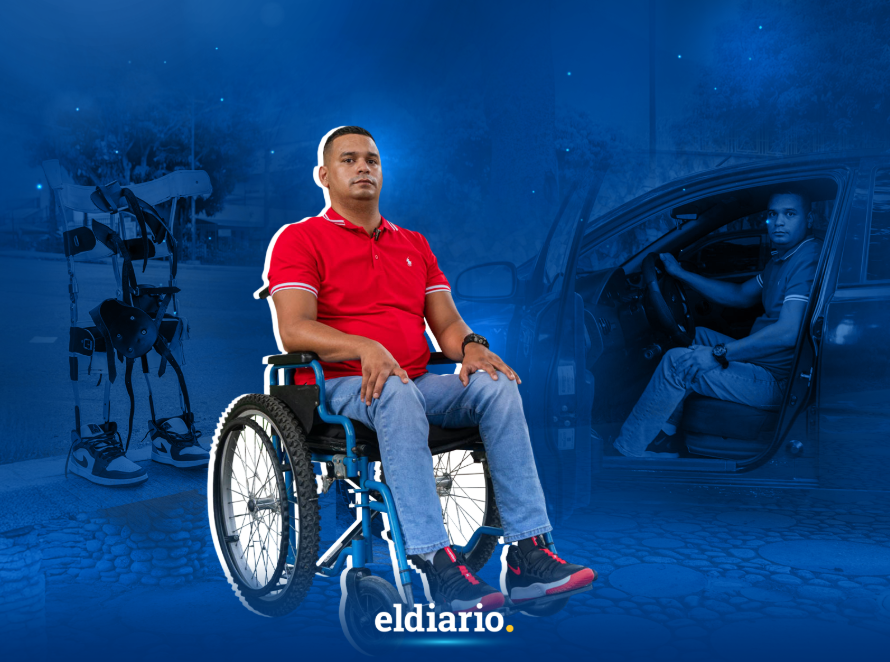
At the Central University of Venezuela (UCV), a multidisciplinary team has designed the first exoskeleton entirely manufactured in the country. Behind this groundbreaking project stands Professor Milvia Acosta — and a waiting list of 17,000 patients.
Until now, assembling an exoskeleton or prosthesis in Venezuela required importing parts from Germany, the United States, or Brazil — an unaffordable cost for the vast majority of patients. The National Rehabilitation Center, which receives patients from all regions of the country, only had two devices available for all its patients.
This reality pushed Professor Milvia Acosta, director of the Guidance Service at UCV’s Faculty of Engineering, to launch the project “Ingenuity in Service of People with Musculoskeletal Disabilities”: designing and manufacturing every component of the device locally.
"In Venezuela, we were capable of doing this. The idea stayed in my mind: this can be done here, within the Faculty of Engineering.”
How Does the Exoskeleton Work?
The exoskeleton is a wearable device that allows people with spinal cord or cervical injuries to stand up and walk with the assistance of a walker. While it does not guarantee complete mobility — results vary depending on the severity and nature of the injury — it significantly improves blood circulation, prevents complications linked to long-term immobility such as pressure sores and kidney issues, and deeply impacts patients emotionally.
“Seeing the world standing up is not the same as seeing it lying down or sitting.”
Sterling: Taxi Driver, Spinal Cord Injury Survivor, Standing Again
Image credit: Aldenix David Ocanto
Among four selected candidates, the team chose Sterling Pérez, 34 years old. After a motorcycle accident three years ago, he suffered a spinal cord injury at the T7-T8 level. His personal goal: to go down the stairs of his building independently, without relying on neighbors for help.
The first time he used the exoskeleton, Sterling insisted on standing up and walking on his own during the project’s public presentation. What he expressed afterward could be summed up in one word: freedom.
“What he gained was freedom. No longer being dependent on another person’s availability, nor on the wheelchair itself.”
A Collective Project, Entirely Made in Venezuela
The device is the result of multidisciplinary teamwork involving mechanical and metallurgical engineers, machinists, orthopedists, and students driven by empathy — many of whom personally know someone living with a disability.
The team also incorporated 3D printing technology to accelerate the production of components, with the ambition of scaling manufacturing through modern equipment.
Today, more than 17,000 patients are on waiting lists nationwide. The next objective is to design a below-the-knee prosthesis and submit an investment proposal to Venezuela’s Ministry of Science and Technology.
Image credit: Foto: Aldenix David Ocanto