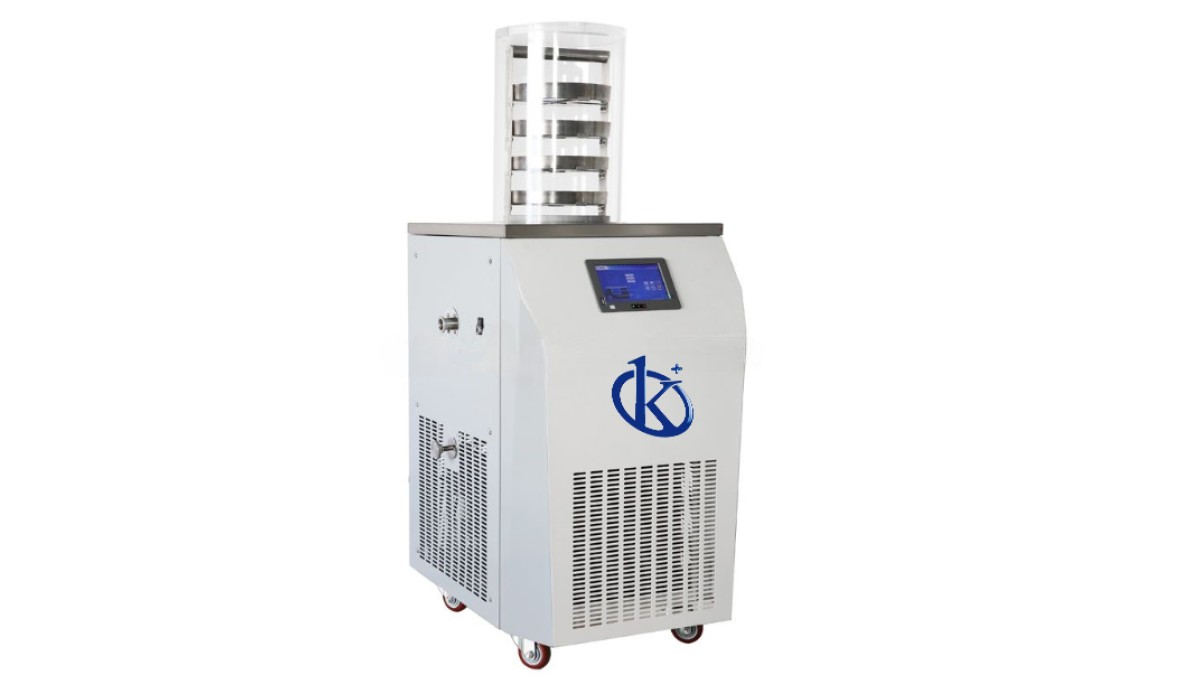
Vertical Laboratory Freeze Dryers: A Practical Guide for 2026
What is it used for in 2026
Vertical laboratory freeze dryers are essential tools in various fields, including medicine, pharmacy, biological research, chemistry, and food processing. Their primary function is to efficiently remove moisture from materials, preserving their biochemical characteristics and extending shelf life. Such equipment is particularly useful for creating long-lasting products from sensitive substances, which can be rehydrated while maintaining their original properties.
History and evolution of the technology
The concept of freeze-drying, or lyophilization, dates back to the early 20th century. Originally developed during World War II for preserving blood plasma, this technology has evolved significantly over the decades. The introduction of vertical laboratory freeze dryers has represented a leap forward, providing greater efficiency, control over the drying process, and adaptability to various substances. Modern units now incorporate advanced features such as automated process controls and enhanced energy efficiency.
How to use it step by step
Using a vertical laboratory freeze dryer involves several critical steps:
- Preparation of samples: Begin by preparing your samples for freeze-drying. Ensure they are in appropriate containers that can withstand the process.
- Loading the dryer: Place the samples carefully onto the drying shelves. Avoid overcrowding to ensure uniform drying.
- Setting parameters: Configure the temperature and vacuum settings according to the material being dried. Each sample may require different settings.
- Starting the process: Initiate the freeze-drying cycle. Monitor the operation through the control panel, ensuring that parameters remain stable.
- Post-process handling: Once the cycle is complete, remove the dried samples. Store them in airtight containers to prevent moisture reabsorption.
Best techniques and protocols
To achieve optimal results when using vertical laboratory freeze dryers, follow these best practices:
- Sample Preparation: Pre-freeze samples to a temperature lower than -40°C, ensuring that water crystallization occurs before the drying process.
- Optimize Vacuum Levels: Set vacuum levels around 0.1 mbar for efficient drying, as lower pressures facilitate sublimation.
- Monitor Temperature: Use temperature sensors to ensure the product does not exceed critical temperatures during the process.
- Regular Calibration: Ensure your equipment is calibrated regularly to maintain accuracy in temperature and vacuum settings.
Practical applications by laboratory type
Vertical laboratory freeze dryers find use in various laboratory types as follows:
Medical Laboratories
Used for preserving biological samples, vaccines, and drugs, maintaining their efficacy over time.
Pharmaceutical Laboratories
Essential for producing stable pharmaceutical products that require long shelf lives without refrigeration.
Food Laboratories
Used for lyophilizing fruits, vegetables, and prepared meals, making them lightweight and easy to store.
Research Laboratories
Valuable for preserving sensitive biological materials for further analysis or experimentation.
Regulations, standards and certifications
When using vertical laboratory freeze dryers, compliance with industry regulations and standards is crucial. Key certifications to consider include:
- ISO 9001: Ensures quality management systems are in place.
- FDA regulations: For those in the pharmaceutical sector, adherence to FDA guidelines ensures products are safe for consumption.
- CE marking: Indicates conformity with health, safety, and environmental protection standards for products sold within the European Economic Area.
Comparison with alternative technologies
Vertical laboratory freeze dryers are often compared to other drying technologies such as spray drying and air drying. While spray drying is faster, it often alters the structure of heat-sensitive materials. Air drying, on the other hand, can lead to poor preservation of volatile compounds. Freeze drying retains the integrity of samples better despite taking longer, making it more suitable for sensitive applications.
Comparison of available models
| Model | Best for | Key specs | Recommended use case |
|---|---|---|---|
| YR05198 | General laboratory use | Price: $4392.00, Area: 0.18m²/0.27m² | Routine lyophilization tasks in various labs. |
| YR05199 | Pharmaceutical applications | Price: $4882.00, Area: 0.09m² | Creating stable pharmaceuticals. |
| YR05200 | Biological research | Price: $4178.00, Area: 0.18m²/0.27m² | Preserving biological samples for studies. |
| YR05201 | Food preservation | Price: $5061.00, Area: 0.09m² | Lyophilizing food products for storage. |
| YR05985-1 | Fruit and vegetable processing | Price: $16800.00, Area: 0.7m² | Commercial lyophilization of fruits and vegetables. |
| YR05985-2 | Advanced food processing | Price: $21000.00, Area: 1.04m² | Large-scale production of dried food products. |
Common mistakes and how to avoid them
Avoid these common pitfalls when using vertical laboratory freeze dryers:
- Overloading the dryer: Ensure there is enough space between samples to allow for proper air circulation.
- Improper temperature settings: Double-check temperature settings based on the specific characteristics of the samples being dried.
- Inadequate sealing of containers: Use airtight containers post-process to prevent moisture reabsorption.
Maintenance, calibration and good practices 2026
To maintain the efficiency of your vertical laboratory freeze dryer, consider the following:
- Routine cleaning: Regularly clean the vacuum chamber and drying shelves to avoid buildup of residues.
- Frequent calibration: Calibrate temperature and vacuum gauges monthly to ensure accuracy.
- Scheduled servicing: Perform comprehensive servicing by qualified technicians annually.
Cost-benefit analysis 2026
Investing in vertical laboratory freeze dryers can be cost-effective in the long run. These machines reduce waste by preserving samples for extended periods, thus minimizing the costs associated with resampling and re-running experiments. The initial investment may be high, but the longevity and efficiency gained make it a worthwhile expenditure.
Frequently asked questions
What are the main benefits of using a vertical laboratory freeze dryer?
Vertical laboratory freeze dryers provide superior preservation of samples, maintaining their biochemical integrity, and extending shelf life, which is crucial for sensitive materials.
How do I choose the right model for my laboratory?
Consider the volume of samples you need to process, the specific requirements of your materials, and your budget. Refer to the comparison of available models to find a suitable option.
What is the average lifespan of a vertical laboratory freeze dryer?
With proper maintenance, a vertical laboratory freeze dryer can last around 10 to 15 years, depending on usage intensity and care.
Can I use a freeze dryer for food preservation at home?
While home models are available, industrial vertical freeze dryers are designed for laboratory use and may not be suitable for everyday household food preservation needs.
What common mistakes should I avoid when operating a freeze dryer?
Avoid overloading the dryer, incorrect temperature settings, and failing to use airtight containers after the drying process.
How often should I calibrate my freeze dryer?
It is recommended to calibrate your freeze dryer at least once a month to ensure accuracy of temperature and vacuum levels.
How can I request a quote for a vertical freeze dryer?
Contact your supplier or manufacturer representative to request a quote based on your specific needs and laboratory requirements.
If you are looking for a fusion of innovation and quality, you have come to the right place. At Kalstein, we offer you the luxury of exploring our exclusive catalog of laboratory equipment. We manufacture every device to the highest standards of excellence. Our intuitive and seamless online purchasing channels are designed for your convenience, securing the most competitive prices. Hesitate no longer — we bring science to life, it is time to become part of our community.