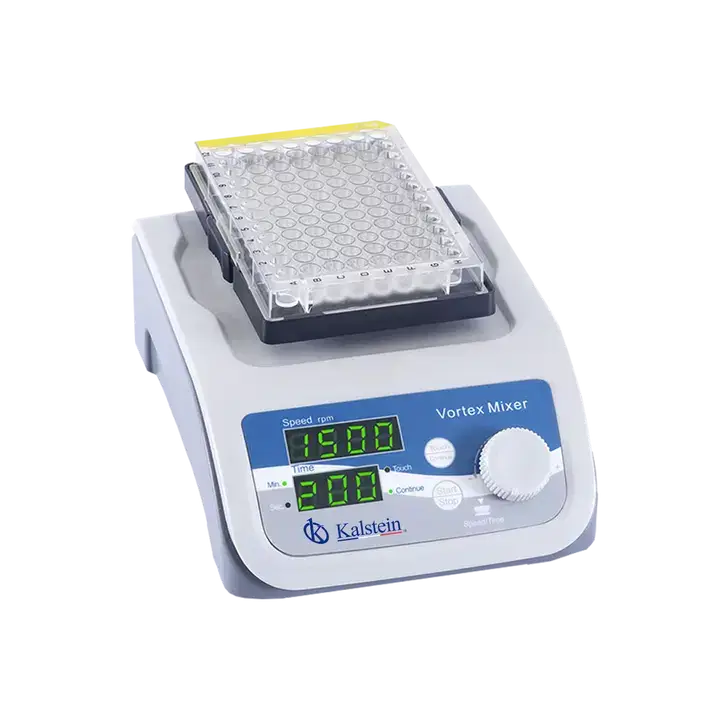
Vortex Mixers: Common Mistakes and How to Avoid Them in Daily Operation 2026
Vortex mixers are essential tools in laboratories across various disciplines, particularly for mixing small samples. They provide rapid and uniform mixing, crucial for ensuring sample integrity. However, with their widespread use comes the risk of common operational mistakes. This article aims to shed light on effective usage, potential pitfalls, and best practices for vortex mixers in 2026.
What is it used for in 2026
In 2026, vortex mixers are primarily used in laboratories to mix small volumes of liquids quickly and efficiently. Their applications range from preparing samples for analysis to ensuring the even distribution of reagents in chemical experiments. Vortex mixers are vital for various laboratory processes including solubilization, emulsification, and homogenization. They are especially beneficial in environments where precision and reliability in sample preparation are paramount.
History and evolution of the technology
The vortex mixer has evolved significantly since its inception. Initially designed for simple mixing tasks, advancements in technology have led to the development of models with enhanced speed control, programmable mixing protocols, and more robust build quality. Over the years, vortex mixers have become indispensable in laboratories, adapting to the increasing demands for efficiency and reproducibility in scientific research.
How to use it step by step
Using a vortex mixer effectively involves the following steps:
- Preparation: Ensure that the vortex mixer is on a stable surface and is plugged in.
- Sample Placement: Place the sample container securely on the mixer platform.
- Speed Adjustment: Set the appropriate speed based on the viscosity of the sample.
- Mixing: Activate the mixer. If the unit has a timer, set it according to the mixing needs.
- Completion: Once mixing is complete, turn off the mixer and carefully remove the sample.
- Clean Up: Wipe down the mixer surface to prevent cross-contamination.
Best techniques and protocols
To achieve optimal results while using a vortex mixer, consider these techniques:
- Use appropriate containers that fit snugly on the mixer.
- Start at a lower speed and gradually increase to avoid splashing.
- For viscous samples, longer mixing times may be necessary.
- Regularly calibrate the mixer to ensure consistent performance.
- Employ a stop-and-check method to ensure thorough mixing.
Practical applications by laboratory type
Vortex mixers have a wide range of applications across various laboratory types, including:
- Biotechnology: For mixing cell cultures and reagents.
- Clinical Labs: Preparing samples for blood tests and chemical analyses.
- Environmental Testing: Homogenizing soil and water samples.
- Pharmaceuticals: Ensuring uniformity in drug formulations.
Regulations, standards and certifications
Vortex mixers must comply with various international standards and certifications including ISO 9001 for quality management systems and ISO 13485 for medical devices where applicable. Laboratories are encouraged to ensure that their vortex mixers are certified to meet these standards to guarantee safety and performance.
Comparison with alternative technologies
While vortex mixers are widely used, alternative technologies such as magnetic stirrers and ultrasonic mixers offer different benefits:
- Magnetic Stirrers: Suitable for longer mixing durations with no risk of splashing.
- Ultrasonic Mixers: Ideal for dispersing nanoparticles and emulsification.
Choosing between these technologies depends on the specific application needs of the laboratory.
Comparison of available models
| Model | Best for | Key specs | Recommended use case |
|---|---|---|---|
| YR06047-1 | General mixing | Dimensions: x x, Price: $8.50 | Ideal for small volume sample preparation. |
| YR06047-2 | General mixing | Dimensions: x x, Price: $8.50 | Useful for biochemical experiments. |
| YR06047-3 | Viscous samples | Dimensions: x x, Price: $10.00 | Best for mixing thicker solutions. |
| YR06047-4 | High throughput | Dimensions: x x, Price: $16.50 | Perfect for labs with high sample turnover. |
| YR06047-5 | General mixing | Dimensions: x x, Price: $16.50 | Great for educational laboratories. |
| YR06047-6 | Custom mixing protocols | Dimensions: x x, Price: $16.50 | Best for specialized experiments requiring precise control. |
Common mistakes and how to avoid them
Laboratory professionals often make several common mistakes when using vortex mixers:
- Overfilling Containers: Always leave some space to prevent overflow.
- Incorrect Speed Settings: Match the speed with sample viscosity.
- Neglecting Calibration: Regularly check mixer performance to ensure accuracy.
By focusing on these areas, users can significantly improve their mixing results.
Maintenance, calibration and good practices 2026
Regular maintenance and calibration are essential for the longevity and efficiency of vortex mixers. Here are some best practices:
- Clean the mixer surface after each use.
- Check for wear and tear on the mixing platform.
- Perform calibration checks periodically to ensure correct functionality.
Cost-benefit analysis 2026
Investing in a vortex mixer offers significant benefits in laboratory workflows. The cost associated with these mixers is often justified by the time saved during sample preparation and the improved accuracy of results. A careful analysis of the expected volume of use and types of applications should guide purchasing decisions.
Frequently asked questions
How do I choose the right vortex mixer for my lab?
When selecting a vortex mixer, consider the sample types, volumes, and required mixing speed. Assess the features such as programmable settings and ease of cleaning.
Can I use a vortex mixer for high viscosity samples?
Yes, but it is important to choose a model designed for viscous samples and adjust the speed accordingly to achieve effective mixing.
What maintenance is required for vortex mixers?
Regular cleaning, calibration checks, and inspecting for wear and tear are essential maintenance practices to ensure optimal performance.
Are vortex mixers suitable for large volume samples?
Vortex mixers are typically designed for small volumes. For larger samples, consider alternative mixing technologies.
What safety precautions should I take while using a vortex mixer?
Always wear appropriate personal protective equipment and ensure that the mixer is placed securely on a stable surface to prevent accidents.
Can I program my vortex mixer for specific protocols?
Certain models allow for programming specific mixing protocols. Check the model specifications to determine if this feature is available.
Where can I request a quote for a vortex mixer?
You can request a quote for a vortex mixer by contacting our sales team or visiting our website for detailed information.
If you are looking for a fusion of innovation and quality, you have come to the right place. At Kalstein, we offer you the luxury of exploring our exclusive catalog of laboratory equipment. We manufacture every device to the highest standards of excellence. Our intuitive and seamless online purchasing channels are designed for your convenience, securing the most competitive prices. Hesitate no longer — we bring science to life, it is time to become part of our community.